The short version
- Finding valuable links pointing to competitors but not to you
- Discovering untapped link-building possibilities
- Measuring your link profile against industry standards
On this page11 sections
- What Is Backlink Gap Analysis?
- Why This Analysis Makes a Difference
- How to Conduct Your Own Backlink Gap Analysis
- Step 1: Choose the Right Competitors
- Step 2: Dig Into Their Backlinks
- Step 3: Compare and Contrast
- Step 4: Evaluate Quality, Not Just Quantity
- Step 5: Create Your Outreach Plan
- Which tool is best for gap analysis, per people who use all of them
- Tools That Make The Process Easier
- Key Metrics Worth Tracking
- Effective Ways to Close the Gap
- Create Content That Demands Links
- Personalize Your Outreach
- Try the Broken Link Approach
- Strategic Guest Posting
- Build Real Relationships
- Common Pitfalls to Avoid
- Conclusion
- FAQ
- Related Tools & Guides
In the competitive world of SEO, backlinks remain crucial for determining website authority and search rankings. I've found that understanding where you stand compared to competitors can make all the difference in your link-building strategy.
This guide walks you through backlink gap analysis, what it is, why it matters, and how you can use it to boost your site's performance.
What Is Backlink Gap Analysis?
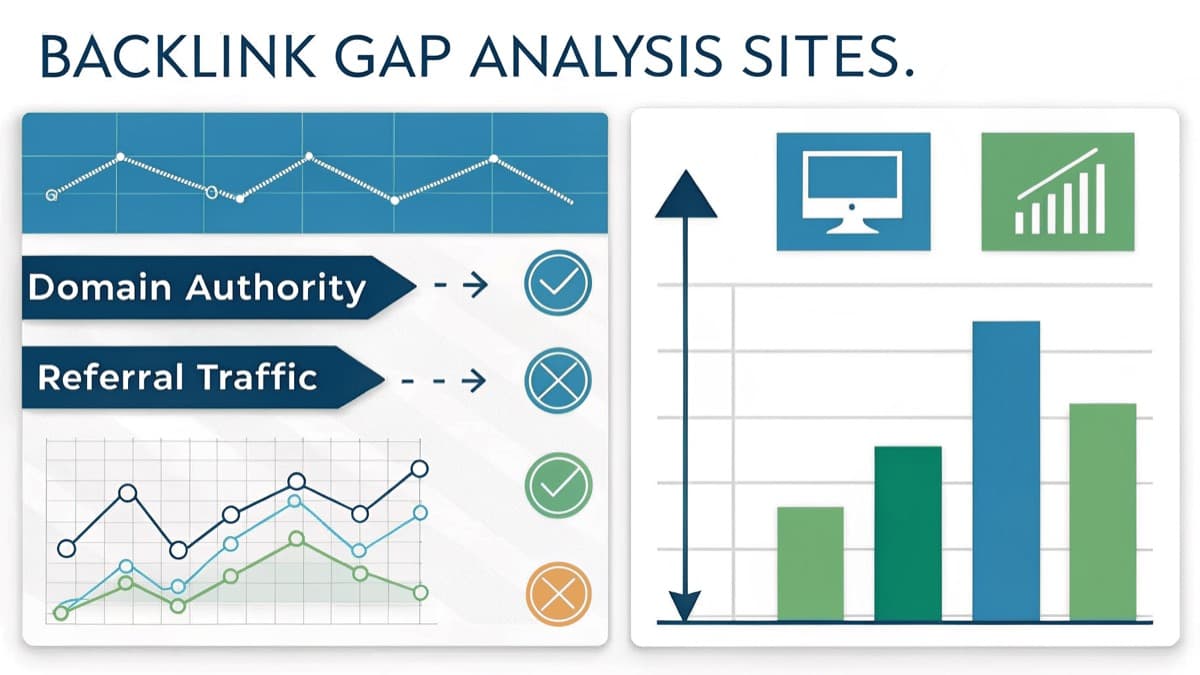
Simply put, backlink gap analysis involves comparing your website's backlinks against your competitors to identify opportunities you're missing. When I perform this analysis for clients, we focus on:
- Finding valuable links pointing to competitors but not to you
- Discovering untapped link-building possibilities
- Measuring your link profile against industry standards
The insights gained often reveal surprising opportunities that were hiding in plain sight.
Why This Analysis Makes a Difference
-
Uncover Hidden Opportunities
Through years of conducting these analyses, I've repeatedly found high-authority domains that link to multiple competitors but somehow overlooked my clients. These represent low-hanging fruit in your outreach efforts.
-
Measure Real Progress
Tracking rankings is important, but understanding where your backlink profile stands compared to competitors gives you concrete benchmarks to work toward.
-
Climb the Rankings
I've seen firsthand how strategically closing backlink gaps can significantly improve domain authority and search position, sometimes surprisingly quickly.
-
Build a Natural Profile
Diversifying your backlinks across different types of websites creates a more natural profile that search engines reward.
How to Conduct Your Own Backlink Gap Analysis
Step 1: Choose the Right Competitors
Don't waste time analyzing irrelevant sites. Focus on:
- Websites ranking above yours for key terms
- Businesses with similar offerings and audience
- Using tools like Ahrefs or SEMrush to validate your selections
Step 2: Dig Into Their Backlinks
Extract comprehensive backlink data, paying attention to:
- Total referring domains (not just total backlinks)
- Domain authority metrics
- Anchor text patterns
- The balance of follow/nofollow links
Step 3: Compare and Contrast
Use specialized comparison tools to identify where competitors have an advantage:
- Find domains linking to multiple competitors but not you
- Note patterns in the types of sites linking to competitors
- Look for content themes that attract links in your niche
Step 4: Evaluate Quality, Not Just Quantity
Not all backlinks are created equal. I prioritize:
- Relevant industry websites
- Sites with established authority
- Domains with consistent traffic
- Links with contextual placement
Step 5: Create Your Outreach Plan
Develop a systematic approach:
- Rank opportunities based on potential impact
- Craft personalized outreach messages
- Prepare valuable content or collaboration ideas
- Track your success rate and refine your approach.
Which tool is best for gap analysis, per people who use all of them
Backlink gap analysis leans heavily on your tool's index and its gap-specific features, and practitioners who have run all the majors tend to name Ahrefs for this exact job. As one put it in an r/SEO comparison thread:
"For in-depth competitor analysis and keyword research, Semrush often feels the most comprehensive. Moz is great for its user-friendly interface and strong backlink analysis tools. Ahrefs, in my opinion, excels at content gap analysis and identifying viral content opportunities. It really depends on your specific focus." (u/needle-ln-techstack, r/SEO)
So if link and content gap analysis is your primary focus, Ahrefs' gap tooling is the common first pick, but the workflow matters more than the brand: any of the three surfaces the domains linking to your competitors but not to you. The tools below all do the mechanical part; the judgment about which of those gap links are actually replicable is still the human's job.
Tools That Make The Process Easier
When I'm conducting a backlink gap analysis, these tools consistently deliver results:
Ahrefs Link Intersect Their visual approach to identifying common competitor backlinks makes spotting opportunities intuitive.
SEMrush Backlink Gap Tool I appreciate how it automatically highlights the most valuable opportunities based on authority metrics.
BacklinkBot.ai The automation features save hours of manual work, especially when prioritizing outreach targets.
Moz Link Explorer Their domain authority metric provides a reliable quality indicator when evaluating potential links.
Key Metrics Worth Tracking
When analyzing potential backlink opportunities, I always consider:
Domain Authority Trends Look beyond the current score to see if the site is gaining or losing authority over time.
Topical Relevance A moderately authoritative site in your exact niche often outperforms a high-authority site with no topical connection.
Anchor Text Distribution Notice which anchor text variations competitors use, this reveals intent signals that search engines value.
Traffic Potential Some of my most valuable backlinks drive significant referral traffic in addition to SEO benefits.
Effective Ways to Close the Gap
Create Content That Demands Links
I've found that comprehensive guides, original research, and visual assets consistently earn the most backlinks. When creating content:
- Address specific industry pain points
- Include unique data or perspectives
- Make it visually appealing and shareable
- Update regularly to maintain relevance
Personalize Your Outreach
Generic outreach emails fail miserably. Instead:
- Reference specific content on their site
- Explain exactly how your content complements theirs
- Offer genuine value before asking for anything
Try the Broken Link Approach
This remains one of my highest-converting tactics:
- Find broken links on sites linking to competitors
- Create equivalent or better content
- Position your content as a solution to their broken link problem
Strategic Guest Posting
Despite what some claim, thoughtful guest posting still works:
- Pitch topics that fill content gaps on target sites
- Develop comprehensive, valuable content
- Include natural contextual links where appropriate
Build Real Relationships
The most sustainable approach I've found:
- Engage with potential link partners on social media
- Promote their content without expecting immediate returns
- Look for genuine collaboration opportunities
Common Pitfalls to Avoid
Chasing Quantity Over Quality I've seen too many sites tank after accumulating dozens of low-quality links. Focus on fewer, better links instead.
Analyzing Irrelevant Competitors Your direct business competitors aren't always your SEO competitors. Analyze sites ranking for your target keywords.
Neglecting Your Internal Link Structure External links matter, but I've seen dramatic improvements just from optimizing how authority flows within a site.
Conclusion
A systematic backlink gap analysis has consistently proven to be one of the highest ROI activities in my SEO toolkit. By understanding where competitors have an advantage and methodically closing those gaps, you can significantly improve your website's authority and rankings.
Whether you tackle this process manually or use tools like BacklinkBot.ai to simplify your efforts, the insights gained will sharpen your link-building strategy and help you allocate resources more effectively.
Start by analyzing just three key competitors this week, you might be surprised by how many opportunities you discover.
FAQ
-
How often should I perform a backlink gap analysis?
For most sites, quarterly analyses provide the right balance of fresh insights without excessive time investment.
-
Is it worth pursuing links from sites that link to all my competitors?
Absolutely, these sites have already demonstrated willingness to link to businesses in your space, making them prime targets.
-
Should I disavow competitor backlinks that seem low-quality?
Focus on building good links rather than worrying about competitors' bad ones. Search engines have become adept at identifying and ignoring low-quality links.
-
How many competitor backlinks should I aim to acquire?
Quality always trumps quantity. Ten relevant, authoritative links will outperform hundreds of low-quality ones.
-
Can backlink gap analysis help with newer websites?
\ than pursuing random opportunities.
Related Tools & Guides
Want these links without the spreadsheet?
We submit your product to 100+ directories by hand, starting at $99. Or the agent finds and pitches the pages already ranking for your keywords for $99 a month. Either way, you see every link before it goes live.