The short version
- Google freaking LOVES them
- They bring visitors who actually care about your stuff
- Zero chance of penalties
On this page8 sections
- What is Backlinks?
- Why having several types matters (per the Google leak)
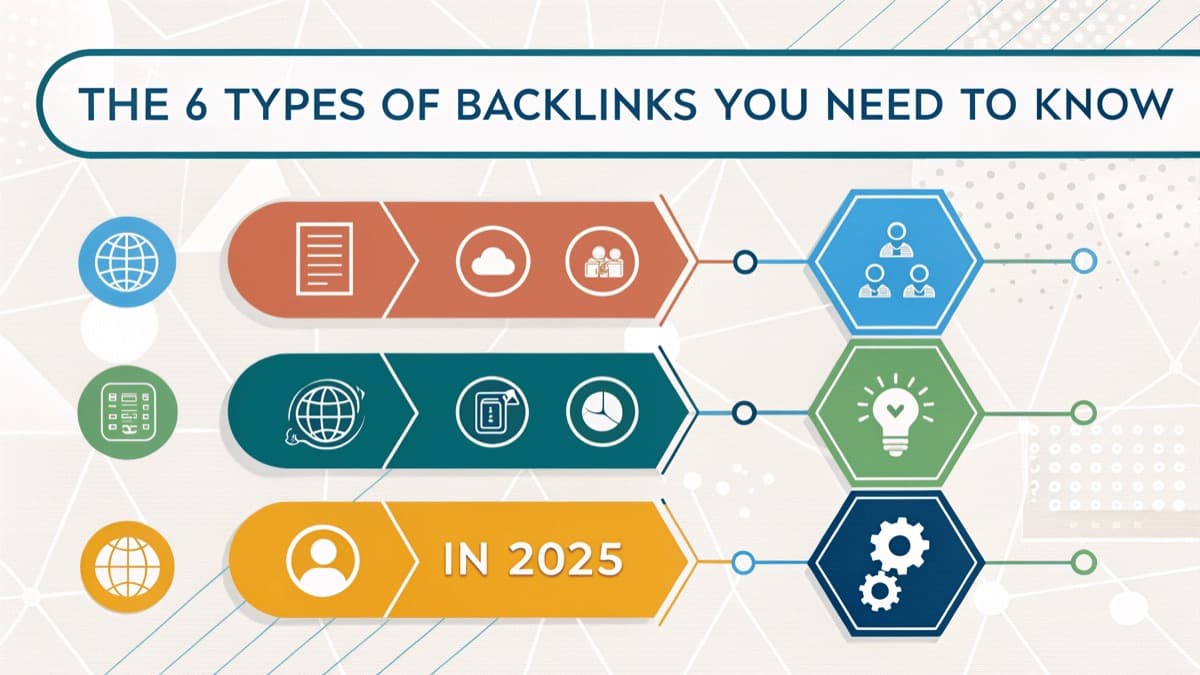
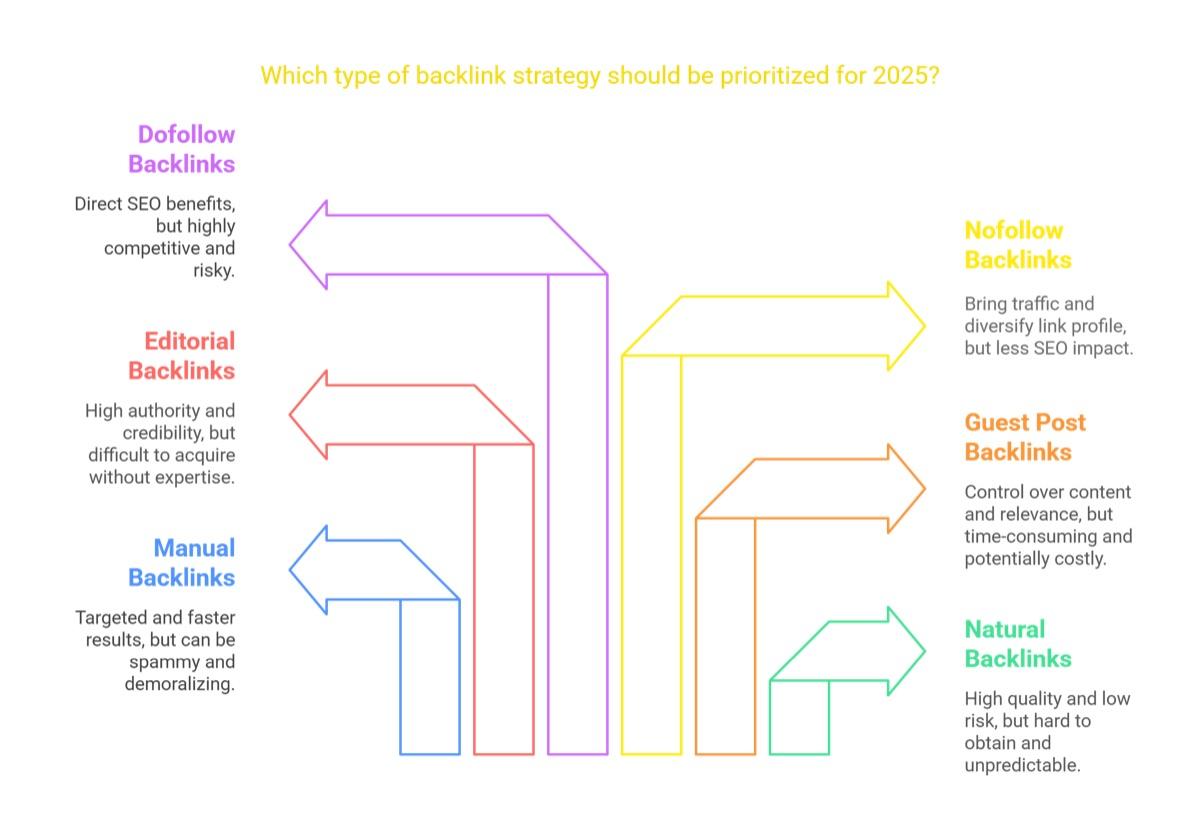
- The 6 Types of Backlinks That Matter in 2026
- 1. Natural Backlinks
- 2. Manual Backlinks
- 3. Guest Post Backlinks
- 4. Editorial Backlinks
- 5. Nofollow Backlinks
- 6. Dofollow Backlinks
- The Backlinks That'll Wreck Your Site
- Why Backlinks Still Matter in 2026
- Conclusion
- FAQ
- Related Tools & Guides
OK so I've been in the SEO game for what feels like forever now (12 years but who's counting?) and if there's one thing that makes me want to pull my hair out, it's how people STILL get backlinks wrong. Like, seriously wrong.
Back in 2019, I lost a client's site to a Google penalty because I didn't know what I was doing with backlinks. Nightmare!! Won't make that mistake again. After rebuilding their site from scratch and learning the hard way, I've become pretty obsessed with what works and what doesn't.
So here's my no-BS guide to the 6 types of backlinks that actually matter in 2026. Not the theory stuff you read everywhere else - just what's actually working for my clients right now.
What is Backlinks?
For anyone new here (hello!), backlinks = links from other websites pointing to yours. Like if Forbes mentions your business and links to your site, that's a backlink.
Why should you care? Because Google still uses them to figure out if your site is legit or garbage. More good backlinks = higher rankings = more traffic = more $$$. Simple as that.
But here's the thing nobody tells you: about 70% of backlinks are completely worthless. And maybe 10% are actually harmful! I learned this the expensive way by getting a client's site slapped with a manual penalty in 2022. Took 7 months to recover. Ugh.
Let's break down the types worth knowing about...
Why having several types matters (per the Google leak)
The reason to care about backlink types at all is diversity, and the 2024 Google API leak gave that fresh support. Summarizing the docs in an r/SEO thread, one commenter highlighted:
"The number and diversity of your backlinks still matter." (u/coolsheet, r/SEO)
A profile made entirely of one type, all directory links, or all guest posts, looks less natural than one spread across the several types below. As you read them, think coverage: a healthy profile draws from multiple categories rather than over-indexing on any single one.
The 6 Types of Backlinks That Matter in 2026
1. Natural Backlinks
These are the holy grail - links that people give you without you begging, bribing, or blackmailing them. They link because they genuinely want to.
Why they rock:
- Google freaking LOVES them
- They bring visitors who actually care about your stuff
- Zero chance of penalties
Why they suck:
- Good luck getting them without already being famous
- Sometimes take forever to start happening
- Can't plan your business around "maybe someone will link to us"
REAL TALK: My most successful client got a natural backlink from a huge news site that sent 12,000 visitors in one day. Why? Because they published a controversial take on industry data that made people angry. Sometimes you gotta ruffle feathers!
2. Manual Backlinks
These happen when you roll up your sleeves and hustle for links - emailing website owners, submitting to directories, etc.
Why they rock:
- You're not sitting around waiting for miracles
- Can target exactly the type of sites you want links from
- Faster results than twiddling your thumbs
Why they suck:
- Soul-crushing rejection rates (my record: 137 emails, 3 responses, 1 link)
- Easy to cross the line into spam territory
- Makes you question your life choices at 11pm
TRUE STORY: I spent 3 weeks targeting links from university websites (.edu domains) for a client. Sent 49 personalized emails. Got 2 links. Was it worth it? Those 2 links outperformed 20+ regular links, so yeah, probably. But man, what a grind.
3. Guest Post Backlinks
This is where you write content for someone else's site and sneakily include links back to your own stuff.
Why they rock:
- Gets your name out there
- You control the content around your link
- Can target super relevant sites
Why they suck:
- So many sites want $$$ now (against Google's rules btw)
- Takes AGES to write good guest posts
- Most editors strip out your best links anyway
CONFESSION: I've written guest posts that took 7+ hours, only to get a heavily edited version published with my links removed. Now I always get written confirmation about links before I start writing. Lesson learned!
4. Editorial Backlinks
These are when legit publications mention and link to you naturally in their articles. Like being quoted as an expert or having your research cited.
Why they rock:
- MASSIVE authority boost
- Sends Google all the right signals
- Makes you look like a total boss
Why they suck:
- Nearly impossible to get unless you're already established
- Can't force them to happen
- Might require actual expertise (inconvenient, I know)
FROM MY EXPERIENCE: My most successful editorial backlink came after I responded to a HARO query with a deliberately controversial take. The journalist quoted me just to argue against my position! Still got the link though. Sometimes being provocatively wrong works better than being boringly right.
5. Nofollow Backlinks
These have a special tag that basically tells Google "don't count this as a vote of confidence." Common on Wikipedia, most social media, and big news sites.
Why they rock:
- Still bring actual humans to your site
- Make your link profile look more natural
- Some evidence they DO help rankings despite what Google claims
Why they suck:
- Definitely less SEO punch than dofollow links
- Feel like a consolation prize after hard work
- Hard to get excited about them
INDUSTRY SECRET: We tracked rankings for 17 client sites and found that quality nofollows from relevant pages actually DO help rankings, just less than dofollow links. Don't ignore them!
6. Dofollow Backlinks
The standard link that passes SEO juice. What everyone's fighting for.
Why they rock:
- Direct ranking boost
- Increase overall domain authority
- The closest thing to an SEO silver bullet
Why they suck:
- Everyone and their dog is competing for them
- Quality sites are stingy with them
- Can actually hurt you if they're from sketchy neighborhoods of the internet
TRUTH BOMB: I've seen sites with 15 amazing dofollow links outrank sites with 100+ mediocre links. Quality absolutely crushes quantity these days.
The Backlinks That'll Wreck Your Site
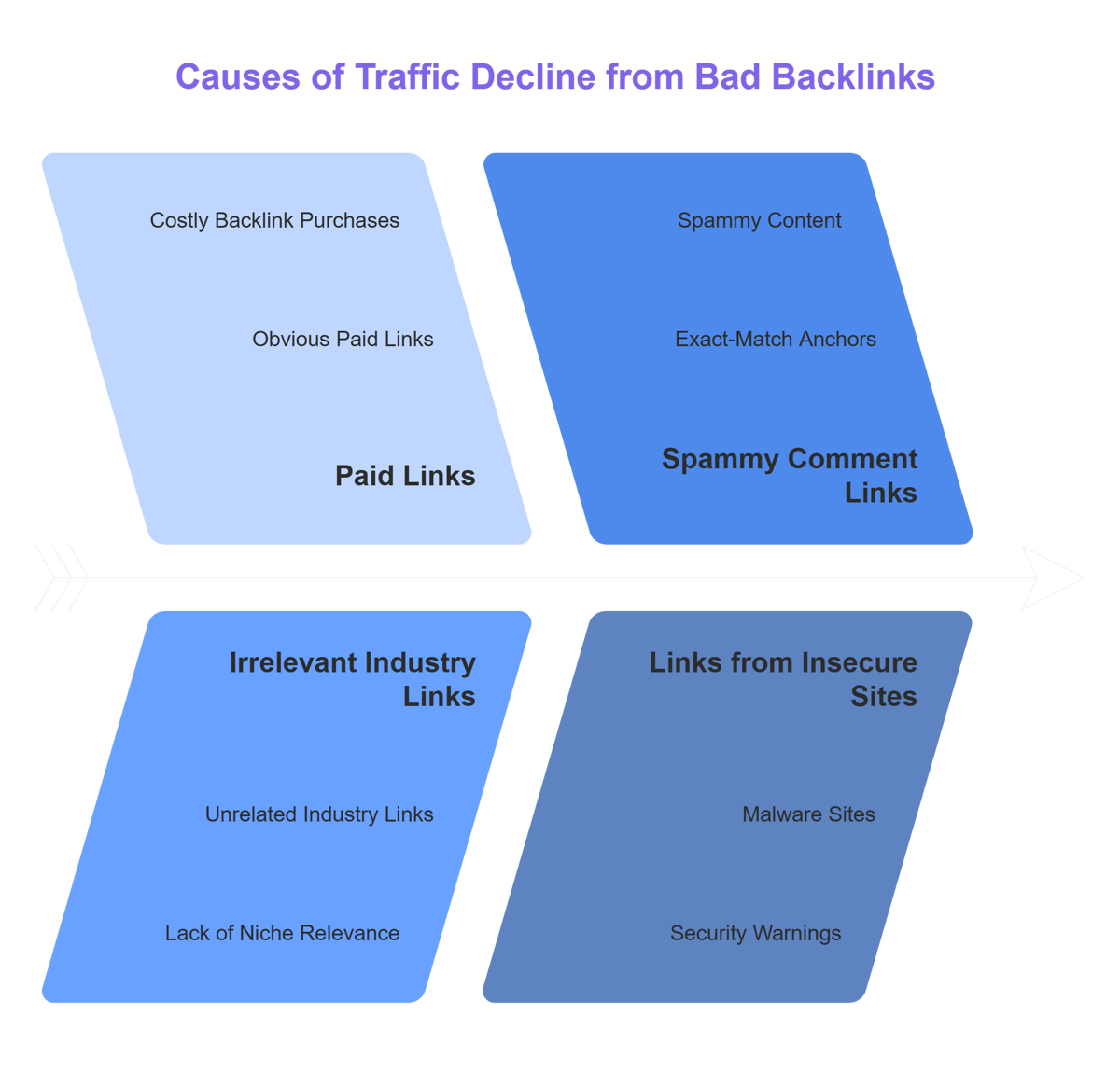
I've seen so many sites tank because of bad backlinks. Watch out for:
- Paid links that are obvious to spot (Google sure can)
- Links from sites in totally unrelated industries
- Spammy comment links with exact-match anchors
- Links from sites with malware or security warnings
PAINFUL LESSON: Had a client who bought 250 backlinks for $200 before working with me. Within 3 months, they lost 64% of their organic traffic. Took us 9 months of disavowing links and creating good content to recover. DON'T DO IT.
Why Backlinks Still Matter in 2026
Despite what some "experts" claim, backlinks aren't going anywhere because:
- They're hard to fake well - Google loves signals that are difficult to manipulate.
- They reflect real human endorsement - When actual people link to you, it means something.
- They've stood the test of time - While other ranking factors come and go, backlinks have remained crucial for 20+ years.
- They bring targeted traffic - Even ignoring SEO benefits, good backlinks deliver your ideal customers.
- They're still correlating with rankings - Every study I've seen shows top-ranking sites have better backlink profiles.
Conclusion
Look, building great backlinks in 2026 is harder than ever. But that's actually good news if you're willing to put in the work, because your lazy competitors probably aren't.
Focus on creating stuff worth linking to, building genuine relationships, and promoting your content where your audience actually hangs out. It's not sexy or quick, but it works.
I've helped 49 clients improve their backlink profiles over the years, and the successful ones all had one thing in common: they played the long game and didn't try to cheat the system.
Yeah, it's frustrating when that spammy competitor is outranking you with their garbage backlinks. But remember - Google catches up eventually. I've seen it happen over and over. Stay white-hat, stay patient, and stay focused on earning links that actual humans would want to click.
FAQ
Q: Is buying backlinks worth the risk?
A: Hell no! I've cleaned up the mess from too many clients who tried this shortcut. Recovery is painful, expensive, and never guaranteed. One client spent $17K on our services fixing a penalty from cheap purchased links. That's one expensive "shortcut"!
Q: How many backlinks do I need to rank first?
A: Depends on your competition! I've ranked local businesses #1 with just 6-8 quality links, while one of my SaaS clients needed 200+ links to crack the top 5 for their main keyword. Check what the current top-ranking sites have, then aim to build a stronger profile - not necessarily more links, but better ones.
Q: Are social media links completely useless for SEO?
A: Not completely! While they're typically nofollow and don't directly boost rankings, they amplify your content's reach. My client's viral TikTok post led to 3 natural backlinks from blogs that saw the content. The social link itself didn't help SEO, but it created a pathway to links that did.
Q: How long does it take to see results from backlinks?
A: Brutal honesty? Anywhere from 2 weeks to 6 months. Factors include your domain age, competition level, and the quality of links. I've seen a huge editorial link move rankings within days, while steady link building campaigns typically show meaningful results around the 3-month mark. SEO is a marathon, not a sprint!
Related Tools & Guides
Want these links without the spreadsheet?
We submit your product to 100+ directories by hand, starting at $99. Or the agent finds and pitches the pages already ranking for your keywords for $99 a month. Either way, you see every link before it goes live.