The short version
- Relevance: Both sites are related in terms of content or audience.
- Natural Context: The link exchange adds value to the user and fits organically within the content.
- Limited Quantity: It’s done sparingly and not as part of a larger link scheme.
On this page10 sections
Reciprocal linking, also known as "link exchange," is an arrangement where two websites agree to link to each other. While it can be a legitimate strategy when done naturally and sparingly, excessive reciprocal linking or participating in link schemes can harm your SEO performance.
This guide explores the concept of reciprocal linking, its pros and cons, and best practices to maximize its benefits while avoiding penalties.
What Is Reciprocal Linking?
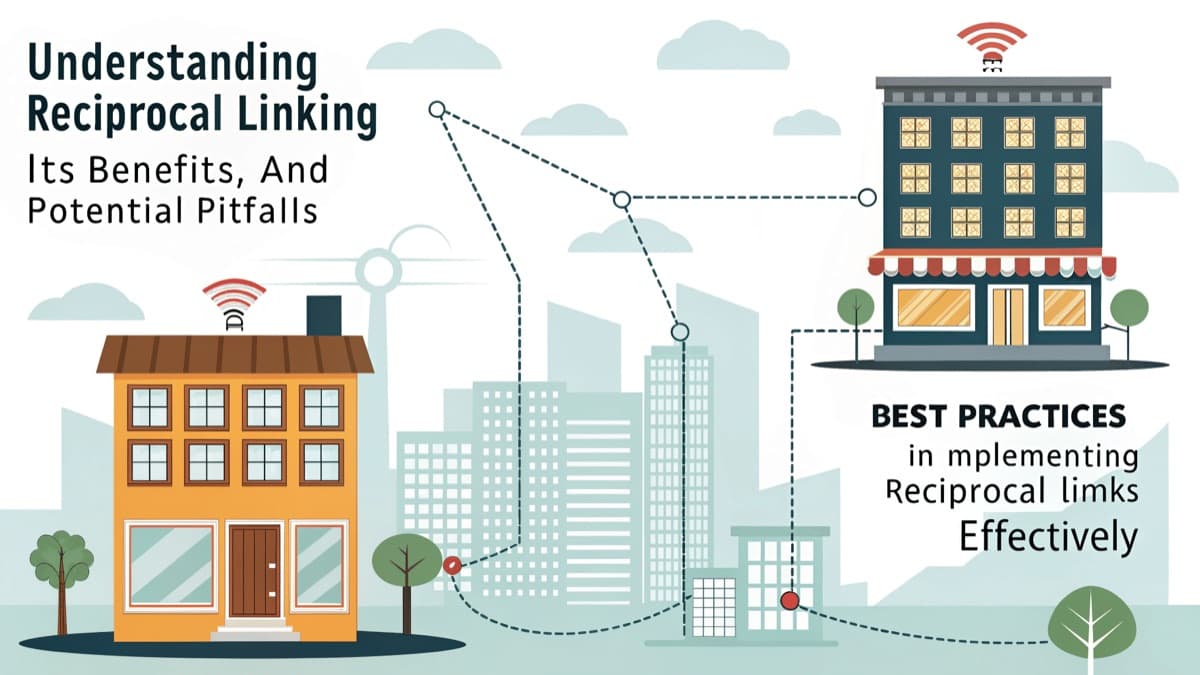
Reciprocal linking occurs when two websites mutually agree to link to each other's content. For example:
- Website A links to Website B, and in return, Website B links back to Website A.
The goal is to drive traffic and improve search engine rankings by using each other's audiences and domain authority.
Are Reciprocal Links Good for SEO?
Benefits
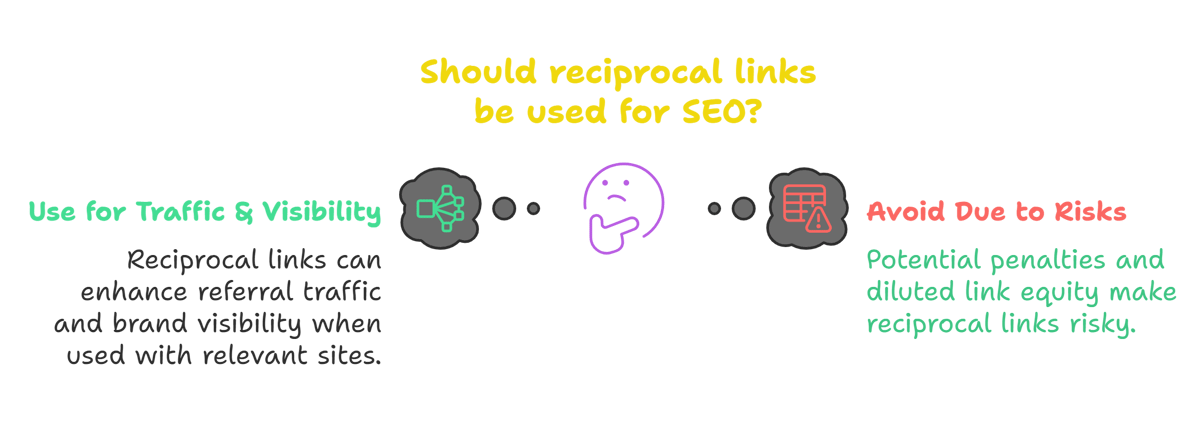
- Boosts Referral TrafficIf done with relevant websites, reciprocal links can send valuable traffic to both parties.
- Improves VisibilityPartnering with authoritative or related sites can improve brand awareness and visibility.
- Encourages NetworkingReciprocal linking fosters relationships with other websites in your niche.
Risks
-
Search Engine PenaltiesIf reciprocal links appear manipulative or excessive, search engines like Google may penalize both sites.
- Google’s guidelines explicitly warn against "excessive link exchanges."
-
Diluted Link EquityReciprocal links don’t carry the same value as one-way (unreciprocated) links because search engines may discount their impact.
-
Low-Quality AssociationsLinking to irrelevant or low-quality sites can harm your reputation and rankings.
Why heavy reciprocal linking is a detectable pattern
The risk with reciprocal links is that a deliberate exchange scheme is exactly the kind of footprint search engines are built to spot. Experienced SEOs put it plainly. As one said in an r/SEO thread on evaluating link quality:
"if I can call bullshit within one minute, they're probably not fooling the 4th richest company in the world." (u/moses101, r/SEO)
A few natural, relevant cross-links between genuinely related sites are normal and fine. A large, systematic web of "you link me, I link you" is the obvious pattern that rule warns about. The acceptable cases below are the natural ones, not organized exchanges.
When Are Reciprocal Links Acceptable?
Reciprocal links are acceptable when:
- Relevance: Both sites are related in terms of content or audience.
- Natural Context: The link exchange adds value to the user and fits organically within the content.
- Limited Quantity: It’s done sparingly and not as part of a larger link scheme.
**Example of Acceptable Use:**A travel blog linking to a hotel’s website in a guide, while the hotel links back to the blog as a recommended resource for travelers.
Best Practices for Reciprocal Linking
- Focus on RelevanceOnly link to websites that are relevant to your niche or industry.
- Limit the Number of Reciprocal LinksEnsure reciprocal links make up only a small portion of your overall backlink profile.
- Use Natural Anchor TextAvoid keyword stuffing in anchor text. Use natural, descriptive text that aligns with the content.
- Prioritize High-Quality WebsitesExchange links only with reputable, authoritative sites to maintain trust and value.
- Add Value to UsersReciprocal links should enhance user experience by directing them to genuinely useful resources.
How to Identify Harmful Reciprocal Links
Red Flags
- Linking to sites with low domain authority or spammy content.
- Excessive link exchanges, creating an unnatural pattern.
- Irrelevant links that provide no value to users.
Audit Your Links
Use tools like BacklinkBot.ai to analyze your backlink profile and identify potentially harmful reciprocal links. Disavow any spammy or low-quality links that could harm your rankings.
Alternatives to Reciprocal Linking
Instead of focusing on reciprocal links, consider these alternatives:
- Content MarketingCreate valuable content that attracts natural, high-quality backlinks.
- Guest BloggingWrite guest posts for authoritative websites in your industry to earn one-way links.
- Broken Link BuildingIdentify broken links on relevant sites and pitch your content as a replacement.
- Social Media PromotionUse social media to promote your content and attract organic backlinks.
Conclusion
Reciprocal linking can be beneficial when done thoughtfully and in moderation, but it’s not a strategy to rely on exclusively. Focus on earning high-quality, organic backlinks through valuable content and genuine relationships. By following best practices and avoiding excessive link exchanges, you can protect your website’s SEO and build a sustainable link profile.
FAQs
-
What is reciprocal linking?
Reciprocal linking, or link exchange, is when two websites agree to link to each other's content. This mutual linking aims to drive traffic and improve search engine rankings by using each other's audiences and domain authority. -
Are reciprocal links good for SEO?
Reciprocal links can boost referral traffic and improve visibility when done naturally with relevant sites. However, excessive or manipulative link exchanges can lead to penalties from search engines and dilute the value of your backlinks. -
When are reciprocal links acceptable?
Reciprocal links are acceptable when they are relevant to the niche, naturally integrated into content, and limited in quantity. Both websites should offer value to users, and the exchange should be done sparingly. -
What are the risks of excessive reciprocal linking?
Excessive reciprocal linking can lead to penalties from search engines like Google. It may also result in diluted link equity, meaning the value of the link exchange is reduced, and can even damage the reputation of both sites involved. -
What are alternatives to reciprocal linking?
Alternatives include content marketing (creating valuable content that naturally attracts backlinks), guest blogging, broken link building (suggesting content as a replacement for broken links), and promoting content through social media for organic backlink growth.
Related Tools & Guides
Want these links without the spreadsheet?
We submit your product to 100+ directories by hand, starting at $99. Or the agent finds and pitches the pages already ranking for your keywords for $99 a month. Either way, you see every link before it goes live.