Unlocking Online Success with Effective Directory Use
I remember when I first launched my small business website back in 2018. For weeks, my traffic stats were basically flatlined - just a few visitors a day, mostly friends and family I'd begged to check it out. Then a fellow entrepreneur suggested I list my site in a few quality web directories. "Directories?" I laughed. "Aren't those ancient history?"
Boy, was I wrong. Within a month of strategic directory submissions, my traffic had tripled. Years later, I still get consistent referrals from those original listings. That's why I'm sharing what I've learned about leveraging web directories for genuine business growth.
What Are Web Directories , Really?
Think of web directories as the internet's specialized address books. Unlike search engines that crawl the entire web, directories offer curated collections of websites organized by topics, making it easier for users to discover relevant resources.
When someone visits a directory like Jasmine's Wedding Resources or Tech Startup Hub, they're actively looking for specific services or information. This makes traffic from directories particularly valuable - these visitors arrive with clear intent.
In my experience working with small business clients, many overlook directories completely, focusing solely on social media and SEO. But directories offer something unique: targeted visibility to people specifically hunting for what you offer.
Why Directories Still Matter in 2025
I get asked this question constantly: "With Google dominating everything, why bother with directories?"
Here's the truth - while directories don't carry the SEO weight they once did, they deliver benefits that search engines can't match:
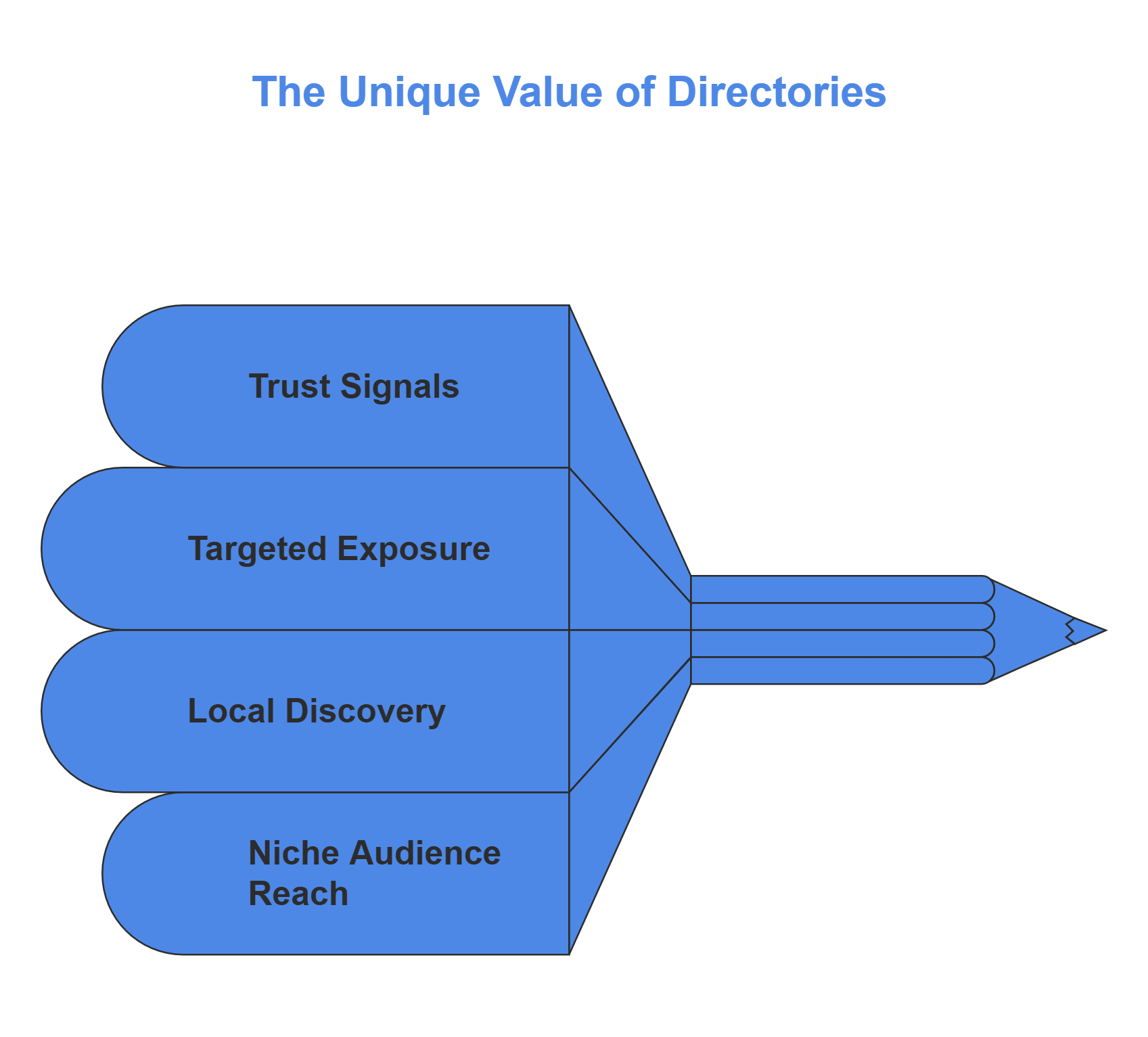
- Trust signals: Getting listed in respected industry directories signals legitimacy to potential customers. When I helped a local bakery get listed in three food-specific directories, their inquiry rate jumped 27%.
- Targeted exposure: Unlike the scattershot approach of general search, directories connect you with people specifically interested in your niche.
- Local discovery: For brick-and-mortar businesses, local directories drive foot traffic. My client Maria's bookshop saw a 15% increase in first-time visitors after getting listed in neighborhood guides.
- Niche audience reach: Industry-specific directories connect you with audiences that mainstream platforms might miss.
Yes, Google dominates search, but directories serve a different purpose altogether. They're less about random discovery and more about purposeful connection.
Types of Directories Worth Your Time
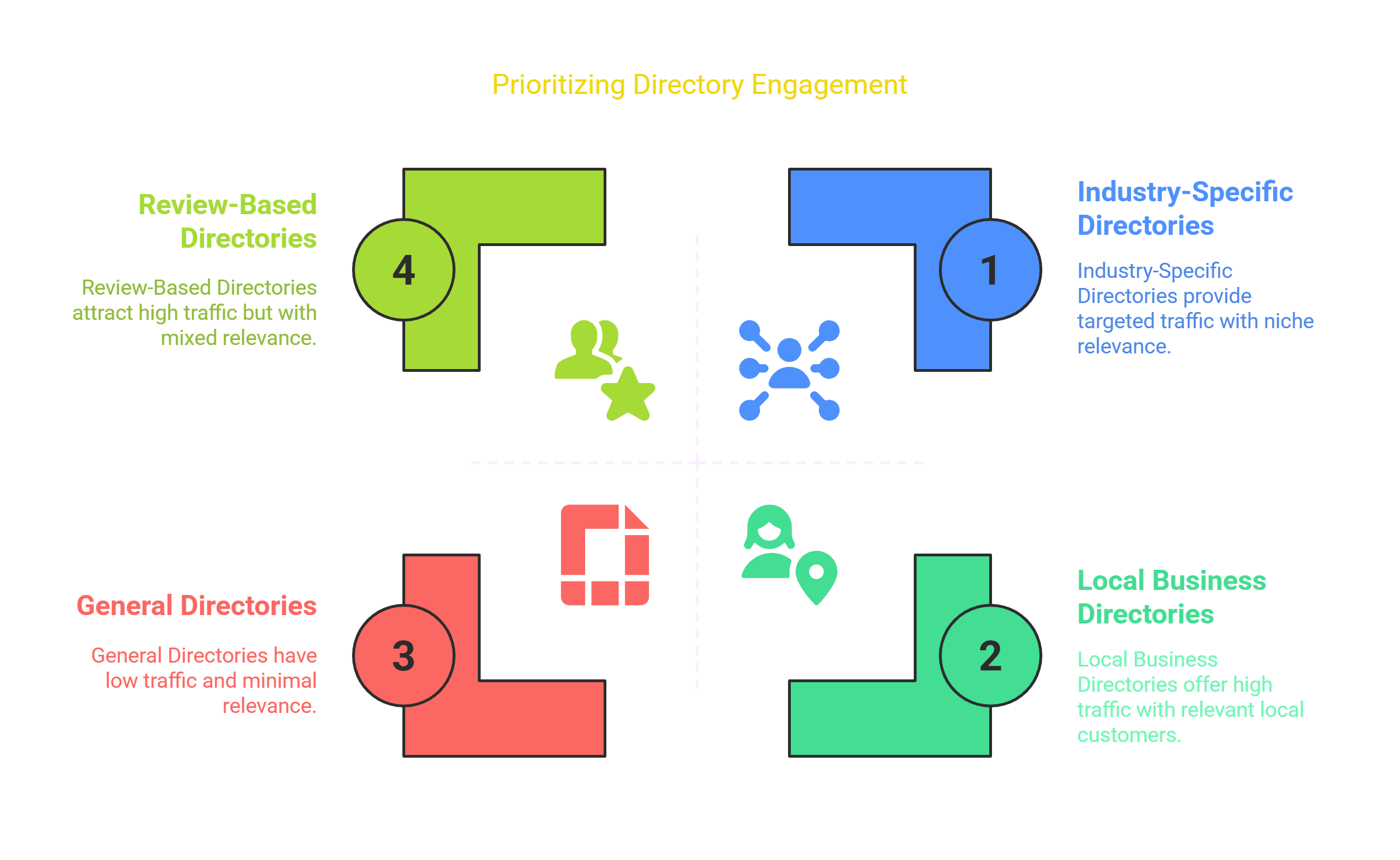
Not all directories deserve your attention. Through trial and error (and some embarrassing mistakes), I've identified which types actually drive results:
Local Business Directories
Perfect for businesses serving specific geographic areas. My restaurant clients consistently report new customers finding them through local listings.
Industry-Specific Directories
These cater to particular niches - from wedding photographers to cybersecurity firms. The traffic is lower volume but incredibly targeted.
Review-Based Directories
Sites like Yelp and Angi that combine directory listings with customer reviews. These build credibility while driving traffic.
Association Directories
Professional organizations often maintain member directories that carry significant trust with consumers.
I wasted months submitting to general, low-quality directories years ago. Learn from my mistake - focus on quality and relevance over quantity.
Getting Listed: Step-by-Step Approach
After helping dozens of businesses with directory submissions, I've developed a process that works:
- Research relevant directories Start by identifying directories where your target audience actually spends time. Don't just submit everywhere.
- Prepare your materials Craft compelling descriptions (unique for each directory), select high-quality images, and verify all contact information.
- Follow submission guidelines carefully Each directory has specific requirements - ignoring them is the fastest way to get rejected.
- Track your submissions Keep a spreadsheet noting where you've submitted, acceptance status, and any login credentials.
- Update listings regularly Set a quarterly reminder to verify all information remains accurate.
When my client Jake launched his accounting practice, we carefully submitted to just seven highly-relevant directories instead of dozens of random ones. Within weeks, he received three new client inquiries directly attributed to those listings.
Common Directory Submission Mistakes
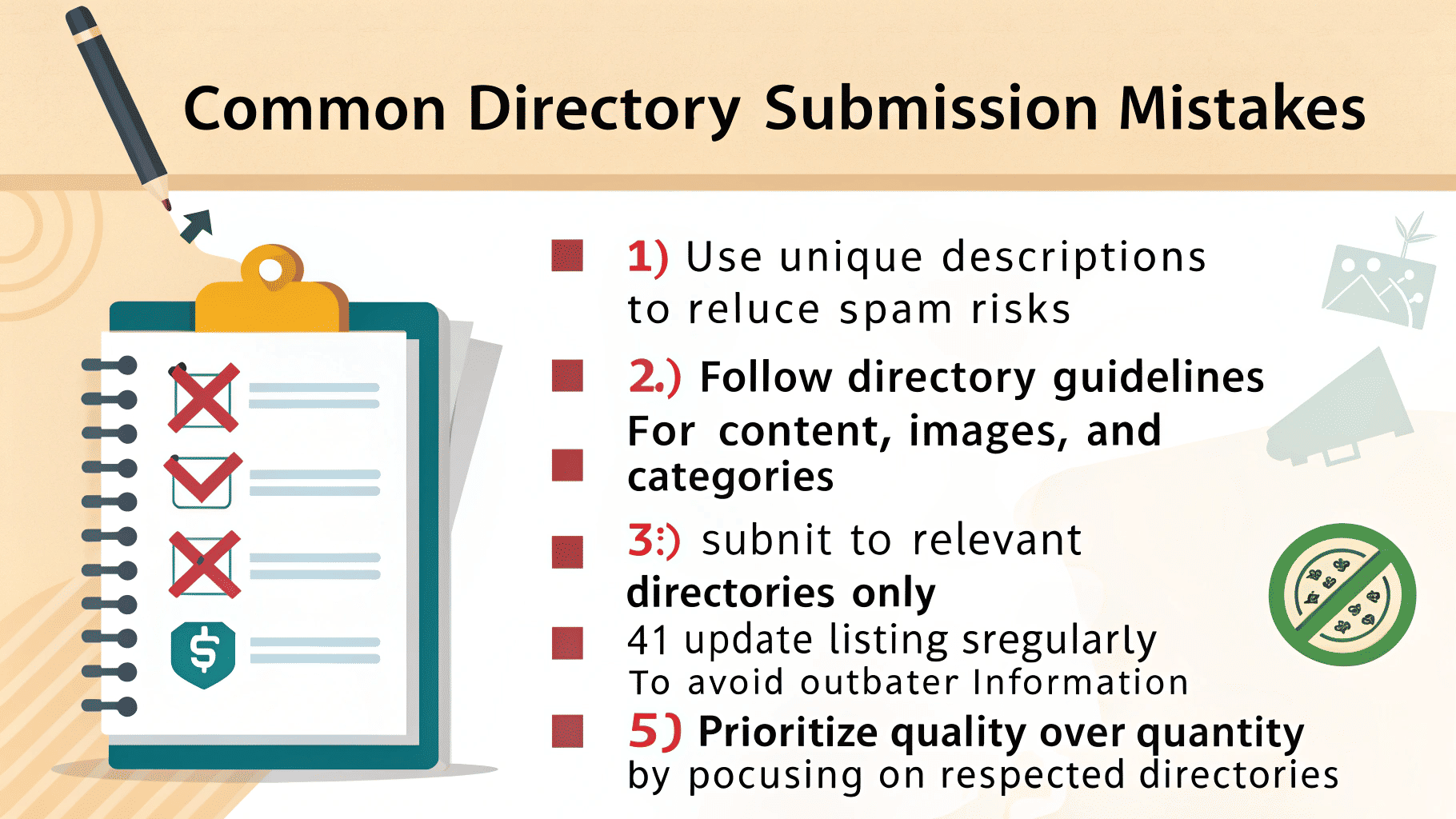
I've made plenty of directory blunders over the years. Here are the biggest ones to avoid:
Using identical descriptions everywhere This screams "low effort" and can even trigger spam filters. I've seen rejection rates drop by 40% when using customized descriptions.
Ignoring directory guidelines Each platform has specific rules about content length, image requirements, and categorization. Skipping these details often leads to rejection.
Submitting to irrelevant directories Getting listed in a pet services directory won't help your accounting firm. It might even hurt your brand perception.
Neglecting to monitor listings Business details change - phone numbers, addresses, services offered. Outdated directory information frustrates potential customers.
Focusing on quantity over quality Five listings in respected, relevant directories outperform fifty listings in obscure, low-traffic ones every time.
Measuring Directory Success
How do you know if your directory strategy is working? Through managing directory campaigns for various clients, I've found these metrics most useful:
Referral traffic Use UTM parameters or referral reports to track visitors from each directory.
Conversion rate from directory traffic Are these visitors becoming customers? This varies wildly by directory quality.
Phone call tracking Simple call tracking numbers can identify which directories drive phone inquiries.
Citation consistency Tools like Moz Local can verify your business information appears consistently across directories.
I was shocked when analyzing results for a client's home renovation business - their smallest, niche directory (Regional Home Builders Association) drove fewer visitors but had a 3x higher conversion rate than their listing on a major national platform.
Directories and Your Broader Marketing Strategy
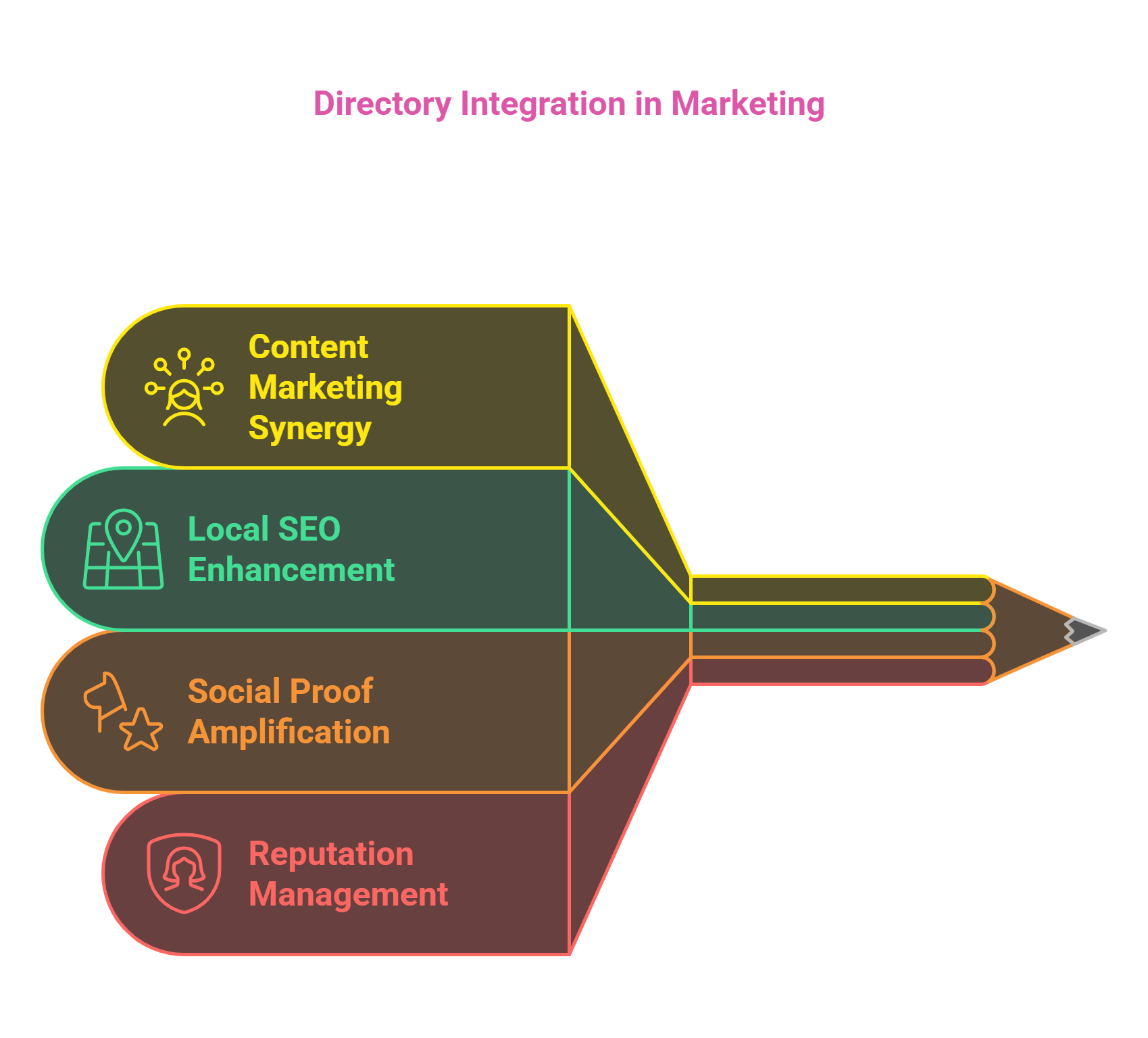
Directories work best as part of an integrated approach. Based on experiments with my own business and clients, here's how to connect them with your other marketing efforts:
Content marketing synergy Use insights from directory categories to identify content topics your audience seeks.
Local SEO enhancement Consistent directory citations strengthen your local search presence. My dental client saw Google Business Profile views increase 32% after cleaning up directory listings.
Social proof amplification Link to positive directory reviews from your website and social channels.
Reputation management Directories often appear in brand searches, giving you more control over your online narrative.
I've found the sweet spot is allocating about 5-10% of your marketing time to directory management - enough to maintain quality listings without diverting resources from higher-impact channels.
Directory Success Stories
Let me share a few real results I've witnessed:
Sarah's Floral Design After listing in three wedding-specific directories, Sarah received 17 new wedding consultation requests in two months - previously her weakest revenue stream.
Parkside Physical Therapy By maintaining detailed, updated profiles on health directories and local business listings, they attributed a 23% increase in new patient inquiries directly to directory traffic.
Mountain View Tech Consultants Their B2B services found new life after strategic placement in industry association directories, leading to two enterprise-level contracts worth over $50,000.
What these businesses had in common wasn't luck - it was consistent attention to directory quality and relevance rather than mass submission.
The Future of Web Directories
Directories aren't static - they're evolving with technology and user behavior. Based on trends I'm seeing:
Hyper-specialization Broader directories are giving way to ultra-niche platforms serving specific industries or interests.
Enhanced verification processes Quality directories are implementing stricter verification to maintain listing integrity.
Integration with emerging platforms Voice search optimization and mobile-first experiences are changing how directories present information.
User review emphasis The line between directories and review platforms continues to blur.
I recently spoke with a directory platform developer who mentioned they're exploring AI-powered recommendation engines to better match directory users with relevant businesses - suggesting directories will continue finding new ways to create value.
Conclusion
Web directories might seem like digital relics, but they remain surprisingly effective tools for businesses seeking focused visibility. Through my years helping clients leverage directories, I've consistently seen them deliver qualified leads when approached strategically.
The key takeaway? Quality over quantity, relevance over random submission, and consistent maintenance over set-it-and-forget-it thinking.
If you're not including directories in your digital marketing mix, you're likely missing opportunities to connect with motivated prospects. Start small with just three highly-relevant directories, monitor your results, and expand based on what's working.
The internet keeps evolving, but the basic human desire to find organized, trustworthy information remains unchanged. That's the enduring value of well-curated web directories - and why they deserve a place in your marketing toolkit.
FAQs
-
How many directories should I submit my website to?
Quality trumps quantity. Start with 5-10 highly relevant directories rather than dozens of random ones.
-
Do directories still help with SEO?
They provide less direct SEO benefit than years ago, but quality directories still contribute to your overall online presence and citation consistency.
-
How often should I update my directory listings?
Review all listings quarterly, plus immediate updates whenever your business information changes.
-
Are paid directory listings worth the cost?
It depends entirely on the directory's reputation and audience. I've seen some paid listings deliver excellent ROI, while others produced nothing.
-
How long does it take to see results from directory listings?
Typically 1-3 months before you can properly evaluate traffic and conversion patterns from new directory listings.