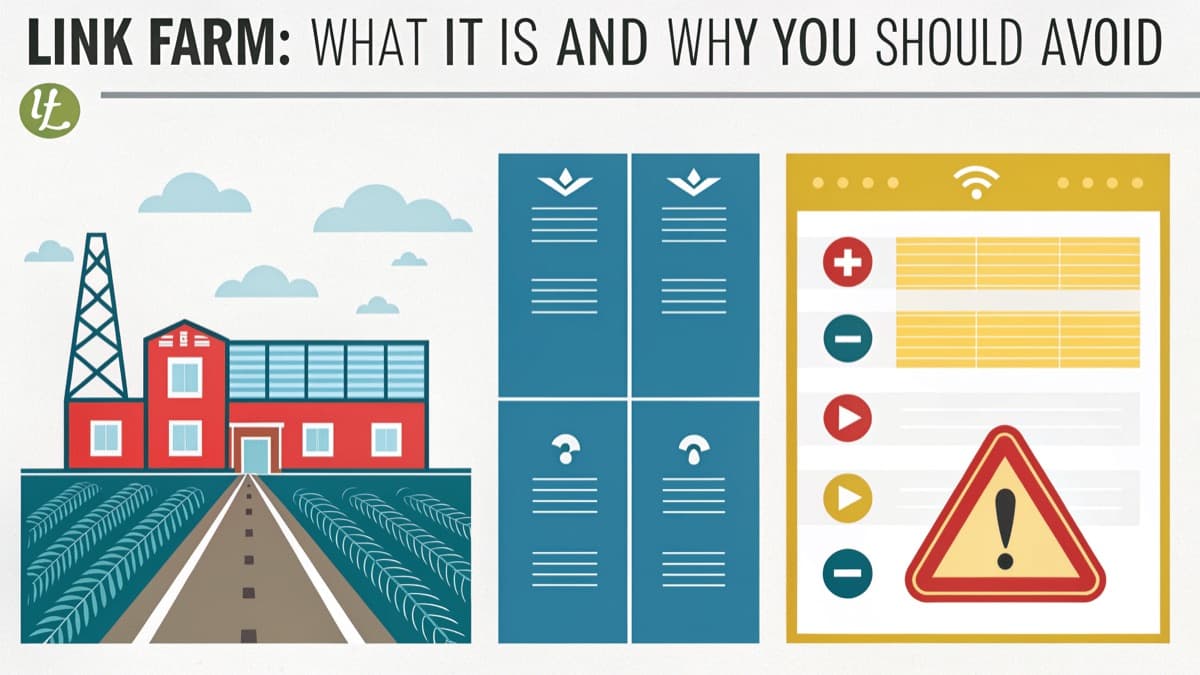
The short version
- They purchase expired domains with existing authority.
- Content is usually thin, duplicated, or generated by AI.
- Sites interlink in unnatural patterns that form detectable footprints.
- Many operate on a pay-to-play model with monthly subscription fees.
- Some disguise themselves as legitimate directories or blog networks.
On this page8 sections
Link farms represent one of the oldest black-hat SEO tactics still in circulation today. These networks emerged in the early 2000s when search engines heavily weighted link quantity in their ranking algorithms. Despite years of Google algorithm updates specifically targeting them, link farms continue to operate, preying on website owners desperate for quick ranking improvements. The tactics have evolved, but the fundamental approach remains the same.
How Link Farms Operate Behind the Scenes
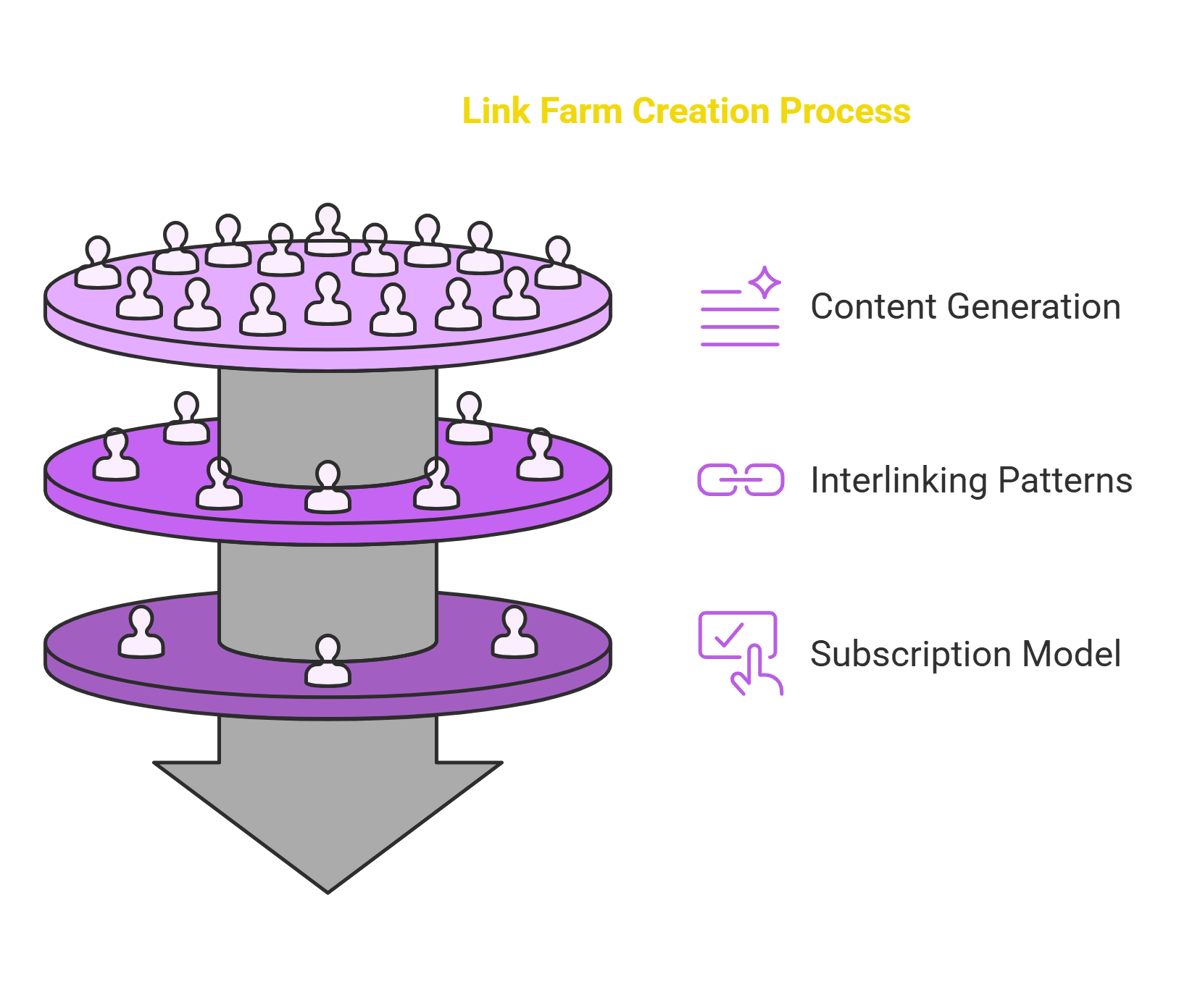
The mechanics of link farms are deceptively simple but highly problematic for search integrity. Operators typically control dozens or hundreds of domains, often purchased cheaply after previous owners abandoned them. They populate these sites with minimal, often auto-generated content before adding excessive outbound links. Many link farms operate subscription models where clients pay monthly fees to maintain their backlinks, with the threat that links will disappear if payments stop.
- They purchase expired domains with existing authority.
- Content is usually thin, duplicated, or generated by AI.
- Sites interlink in unnatural patterns that form detectable footprints.
- Many operate on a pay-to-play model with monthly subscription fees.
- Some disguise themselves as legitimate directories or blog networks.
The Real Consequences of Link Farm Usage
The penalties for using link farms extend far beyond temporary ranking drops. When Google identifies artificial link patterns, they can trigger either algorithmic penalties through the Penguin system or manual actions from Google's human reviewers. Recovery typically takes months of dedicated work, and some sites never fully regain their previous positions. I've worked with businesses that lost over 80% of their organic traffic overnight after link farm penalties hit their sites.
- Algorithmic penalties can affect your entire site instantly.
- Manual actions may remove your site from search results completely.
- Recovery typically requires months of remediation work.
- Your brand reputation suffers with both users and industry partners.
- Competitor reporting can trigger manual reviews of your backlink profile.
- Marketing resources wasted on ineffective tactics.
Identifying Link Farms Before They Damage Your Site
The good news is that spotting a link farm rarely requires fancy tools. Experienced SEOs describe it as a gut check that takes about a minute. In an r/SEO thread on evaluating backlinks, one put the heuristic memorably:
"a lot of people neglect to evaluate whether a site is a PBN or guest post mill. My rule of thumb is 'if I can call bullshit within one minute, they're probably not fooling the 4th richest company in the world.'" (u/moses101, r/SEO)
The point is reassuring and practical: if a site looks like it exists only to host links, thin content, no real audience, outbound links to unrelated sites in every direction, then it looks that way to Google too. You do not need to out-analyze Google's spam systems; you just need to avoid the sites that would fail your own one-minute smell test. The concrete signals below are what that smell test is actually checking for.
Learning to recognize link farms before they harm your website requires understanding their common characteristics. Legitimate sites generally link to others because they provide value to their readers, not because they received payment. When examining potential linking partners, look for sites with actual readership, engagement, and recognition within your industry. Be particularly cautious of services offering guaranteed numbers of backlinks at surprisingly low prices.
- Check for excessive outbound links on the same page.
- Look for irrelevant content with no connection to your industry.
- Examine the site's own traffic and authority metrics.
- Be suspicious of sites with no social media presence or real-world footprint.
- Watch for awkward, keyword-stuffed anchor text.
- Be wary of sites with contact information in countries known for spam operations.
Effective Alternatives to Link Farming
Instead of risking penalties with artificial link schemes, focus on earning backlinks through valuable content and genuine relationships. Creating resources that naturally attract links takes more effort initially but delivers sustainable results. Consider performing original research, developing free tools, or producing comprehensive guides that others naturally reference. These approaches build authority while also driving referral traffic that can convert into customers.
Recovery Strategies After Link Farm Damage
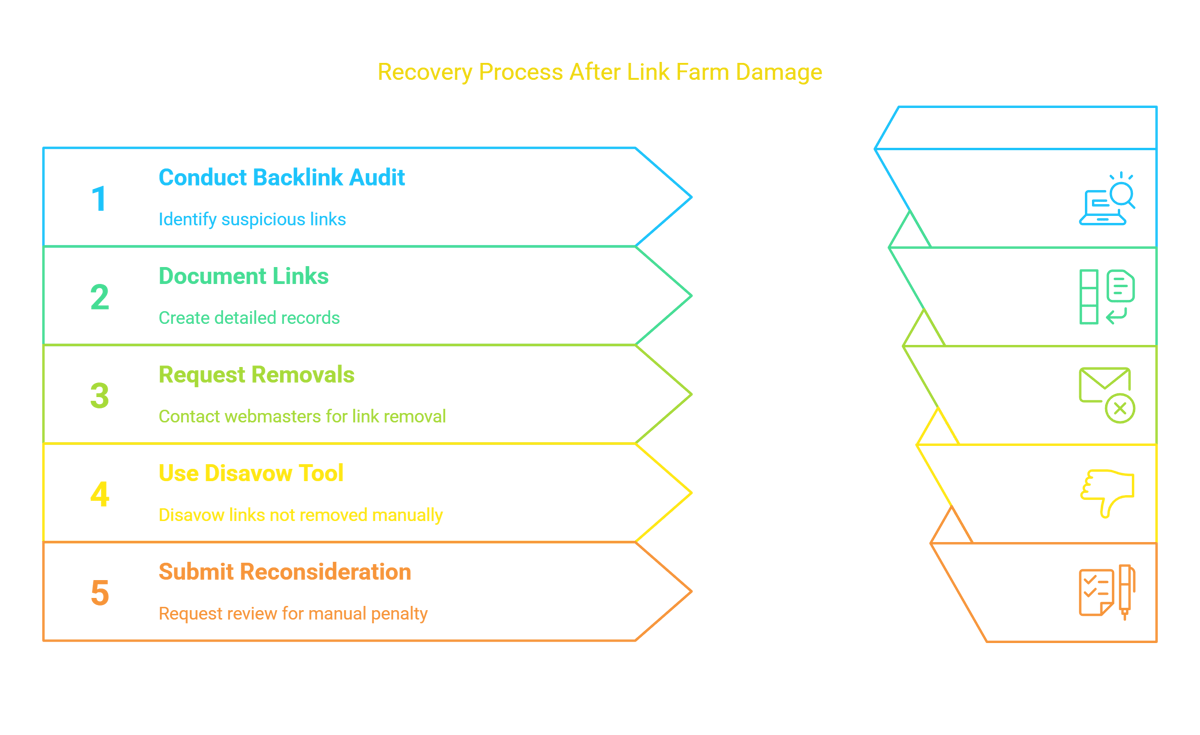
If your site has already been affected by link farm involvement, recovery requires a systematic approach. Begin by conducting a thorough backlink audit using professional tools like Ahrefs or Semrush to identify problematic links. Document everything throughout the process, as this evidence may be needed when requesting reconsideration from Google. Be prepared for a temporary traffic decrease as harmful links are removed, but remember that building a clean backlink profile will provide long-term stability.
- Perform a comprehensive backlink audit identifying all suspicious links.
- Create a detailed spreadsheet documenting all problematic backlinks.
- Contact webmasters directly requesting link removals.
- Use Google's Disavow Tool for links that cannot be removed manually.
- Submit a reconsideration request if you received a manual penalty.
- Invest in creating high-quality content to attract legitimate backlinks.
- Document your remediation process thoroughly for future reference.
Conclusion
While link farms may promise a quick SEO boost, they pose serious risks to your website’s rankings and reputation. Search engines are smarter than ever, and the focus should always be on building a natural, high-quality backlink profile. Avoid shortcuts like link farms and invest in sustainable strategies for long-term success.
FAQs
-
What is a link farm?
A link farm is a group of websites created to generate backlinks with the sole purpose of manipulating search engine rankings. These links are usually irrelevant, low-quality, and spammy, aiming to artificially inflate a site’s authority. -
Why are link farms harmful for SEO?
Link farms provide low-quality backlinks that don’t add real value. Search engines like Google penalize websites using link farms, potentially causing ranking drops, manual penalties, or even removal from search results. It also damages a site’s reputation and credibility. -
How can I identify a link farm?
Look for unnatural link patterns, such as an unusually high number of links in a short time, links from unrelated websites, and low-quality or duplicate content. Link farms often have high outbound link volumes and lack organic traffic. -
What are alternatives to link farms for backlink building?
Instead of link farms, focus on white-hat SEO strategies such as content marketing (creating valuable content), guest posting (writing for authoritative sites), broken link building, competitor analysis, and networking with industry professionals to earn genuine backlinks. -
How can I recover from a link farm penalty?
To recover from link farm penalties, audit your backlink profile to identify harmful links, disavow them using Google’s Disavow Tool, request link removal from the site owners, and focus on building high-quality, relevant backlinks to restore your site’s credibility.
Related Tools & Guides
Want these links without the spreadsheet?
We submit your product to 100+ directories by hand, starting at $99. Or the agent finds and pitches the pages already ranking for your keywords for $99 a month. Either way, you see every link before it goes live.