The short version
- Gather a complete inventory of sites linking to you
- Evaluate each link's potential impact (positive or negative)
- Flag suspicious or harmful links
- Create an action plan for link removal or disavowal
- Identify opportunities to strengthen your profile
On this page11 sections
- Why Your Backlinks Need a Health Check
- What Exactly Is a Backlink Audit?
- Most sites should not disavow at all
- The 5-Step Process I Use With Every Client
- Step 1: Get the Full Picture
- Step 2: Separate the Good from the Bad
- Step 3: Flag the Troublemakers
- Step 4: Clean House
- Step 5: Keep an Eye on Things
- Numbers That Actually Matter
- Common Mistakes I've Seen Repeatedly
- Ignoring NoFollowed Links
- Playing the Numbers Game
- One-and-Done Thinking
- What To Do After Your Audit
- Measuring Success
- Wrapping up
- FAQ
- Related Tools & Guides
Last month, a client called me in a panic. "My traffic dropped 60% overnight!" After diving into their Analytics, the culprit became clear – they'd been hit with a manual penalty from Google. The reason? A toxic backlink profile they didn't even know they had.
I've spent 11 years helping websites recover from these exact situations, and I've learned that regular backlink analysis isn't just helpful – it's essential for survival in today's SEO terrain.
Why Your Backlinks Need a Health Check
Think of your backlink profile like your credit score. Good links build it up; bad ones tear it down. And just like your financial history, what happened years ago can still affect you today.
When I started working with that panicking client, we discovered links from 2019 that were causing problems in 2024. Outdated SEO tactics from previous agencies had left a time bomb in their backlink profile.
What Exactly Is a Backlink Audit?
A backlink audit is a comprehensive check-up of every site linking to yours. We're looking at who's pointing to you, whether those sites help or hurt your reputation with Google, and what story your overall link profile tells.
During an audit, you'll:
- Gather a complete inventory of sites linking to you
- Evaluate each link's potential impact (positive or negative)
- Flag suspicious or harmful links
- Create an action plan for link removal or disavowal
- Identify opportunities to strengthen your profile
I audit my site quarterly, and it's saved me countless headaches.
Most sites should not disavow at all
Before you audit anything, know that experienced SEOs consider the disavow tool over-used and often harmful. As one put it in an r/SEO thread about a disavow gone wrong:
"the disavow file is very useful but it should only be used in an event where the website is ACTUALLY experiencing a manual penalty. That's really the only time. Even if you have spammy backlinks I don't recommend using the disavow file." (u/connor-bringas, r/SEO)
So treat the process below as diagnosis first: most profiles do not need cleaning, and disavowing good links does real damage. Reach for the disavow step only if you have a manual action showing in Search Console.
The 5-Step Process I Use With Every Client
Step 1: Get the Full Picture
First things first – you need to know what you're working with.
I typically use multiple tools to ensure nothing slips through the cracks. Google Search Console provides the baseline data, but it doesn't always catch everything. I complement this with dedicated backlink tools to get the most comprehensive view.
What you need to collect:
- Every URL linking to your site
- The anchor text they're using
- Whether links are followed or nofollowed
- Authority metrics for each linking domain
Pro tip: Don't just look at new links. Historical links matter too – I've found toxic links from 5+ years ago still affecting sites today.
Step 2: Separate the Good from the Bad
This is where experience matters. Not every link evaluation is black and white.
When I evaluate links, I'm looking at:
Relevance: A link from a related industry makes sense. A random link from an unrelated site raises red flags. Last year, I found a client's fashion blog had links from dozens of online pharmacies – a clear signal to Google something fishy was happening.
Authority: Links from established, trusted websites carry more weight. I check domain ratings, but more importantly, I ask: "Would I trust this site enough to recommend it to my mother?"
Anchor Text: This is the clickable text of your link. Too many links with the exact same keyword-rich anchor text screams manipulation to Google. I once audited a site where 87% of their links used the exact same anchor text – no wonder they were penalized!
Context: Where your link appears matters tremendously. Links naturally embedded within content are valuable. Hundreds of links stuffed in footers or sidebars? Not so much.
Step 3: Flag the Troublemakers
Some links are obvious problems. In my experience, these red flags are worth immediate attention:
- Links from sites in languages you don't operate in (unless you're truly international)
- Sudden spikes of links appearing overnight
- Links from sites packed with ads and little real content
- Links from known link networks or farms
- Comment spam links
- Links with overly optimized anchor text
I recently audited a local plumbing company that had hundreds of links from Chinese gambling sites. They had no idea these existed until we discovered them during the audit.
Step 4: Clean House
Once you've identified problematic links, you have two options:
Removal: Reach out directly to webmasters and ask for link removal. This is my preferred first step, though success rates vary wildly. I use a simple template:
"Hello, I'm [name] from [company]. I noticed you're linking to our website at [URL]. While we appreciate the mention, we're currently cleaning up our backlink profile and would appreciate if you could remove this link. Thank you for your help."
Disavow: When removal isn't possible, Google's Disavow Tool lets you tell Google to ignore certain links when evaluating your site. I consider this a last resort, but sometimes it's necessary.
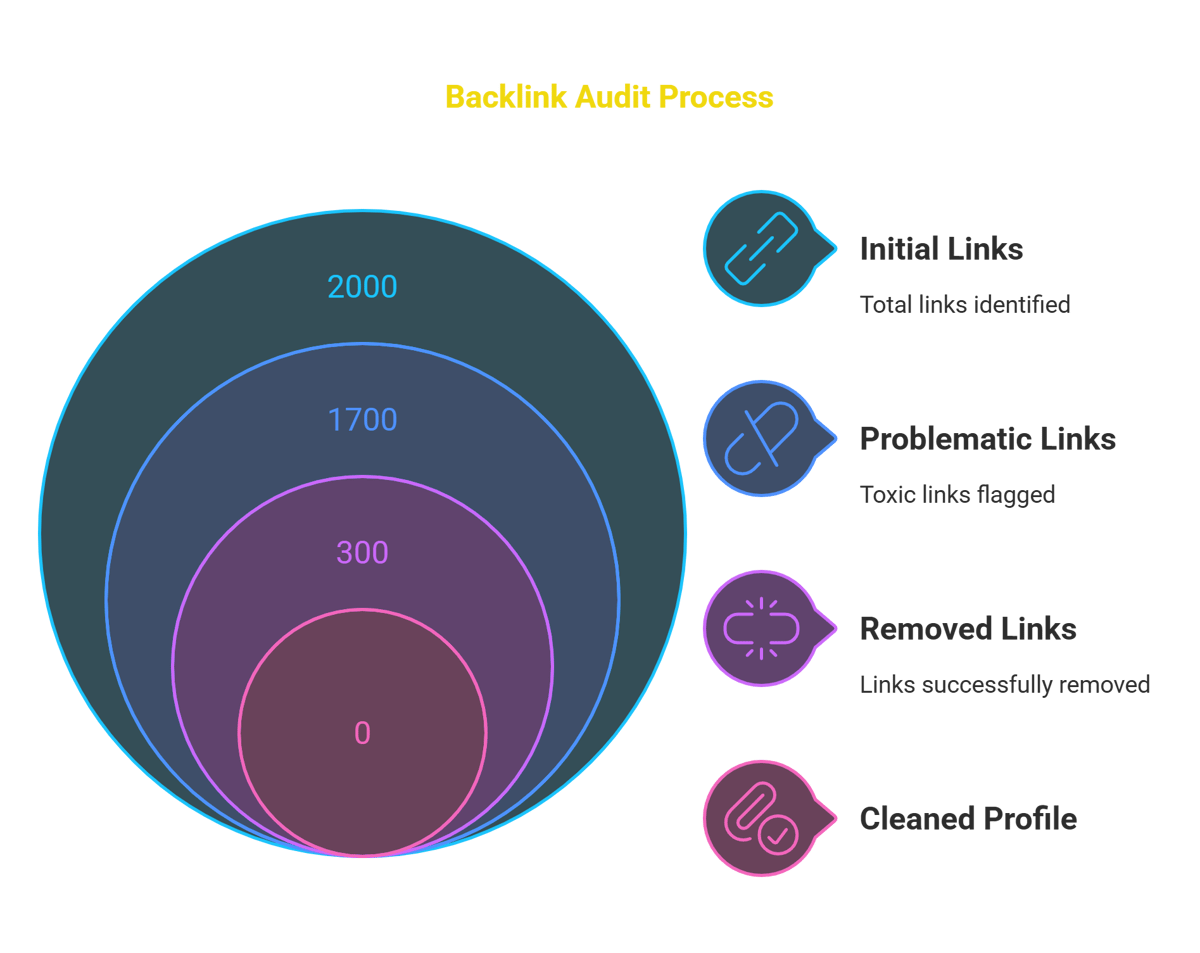
True story: One client had over 2,000 toxic links. After three months of outreach, we only got 300 removed. The disavow tool was crucial for handling the remaining 1,700.
Step 5: Keep an Eye on Things
Backlink auditing isn't a one-and-done task. I've seen competitors launch "negative SEO" attacks by building spammy links to rivals' sites. Without regular monitoring, you might not catch this until it's too late.
Set up alerts for new backlinks and schedule regular reviews. I check my own backlinks monthly and do deeper dives quarterly.
Numbers That Actually Matter
When reviewing your backlink profile, these are the metrics worth tracking:
- Referring Domain Count: I'd rather see 100 links from 100 different quality websites than 1,000 links from just 3 sites.
- Authority Spread: What percentage of your links come from high-authority vs. low-authority sites? I aim for at least 25% from strong domains.
- Toxic Link Percentage: If more than 10% of your backlinks raise red flags, you need to take immediate action.
- Anchor Text Diversity: In a natural profile, branded anchors (your company name) should make up at least 50% of your links. If exact-match keyword anchors exceed 15%, that's usually problematic.
- Link Growth Rate: Natural links grow organically over time. Sudden spikes look suspicious to both humans and algorithms.
Common Mistakes I've Seen Repeatedly

Ignoring NoFollowed Links
"They don't pass SEO value, so why bother?" This mindset is outdated. While nofollow links might not directly boost rankings, they:
- Create a natural-looking profile
- Drive referral traffic
- Build brand awareness
Plus, Google has hinted they use nofollow links as "hints" rather than directives. I never ignore them during audits.
Playing the Numbers Game
A client once bragged about buying 10,000 backlinks for $50. Three months later, they disappeared from Google completely.
Quality always beats quantity. I'd rather have five links from industry publications than 500 from random blogs.
One-and-Done Thinking
The biggest mistake? Thinking a link audit is a project rather than a process. Your backlink profile changes constantly. Competitors might attack you with bad links. Previous good links might turn bad if the hosting site changes ownership.
Regular monitoring is non-negotiable.
What To Do After Your Audit
You've cleaned house - now what? Focus on building a stronger foundation:
- Strengthen Good Relationships: If you found high-quality sites linking to you, nurture those relationships. They might be open to additional links in the future.
- Diversify Your Sources: Aim for links from different types of sites - news outlets, industry blogs, business directories, educational institutions.
- Create Link-Worthy Content: The best links come naturally when you publish exceptional content. My most successful piece has earned over 300 natural backlinks simply because it provided unique value.
- Learn From Competitors: What sites link to them but not to you? These could be opportunities worth pursuing.
Measuring Success
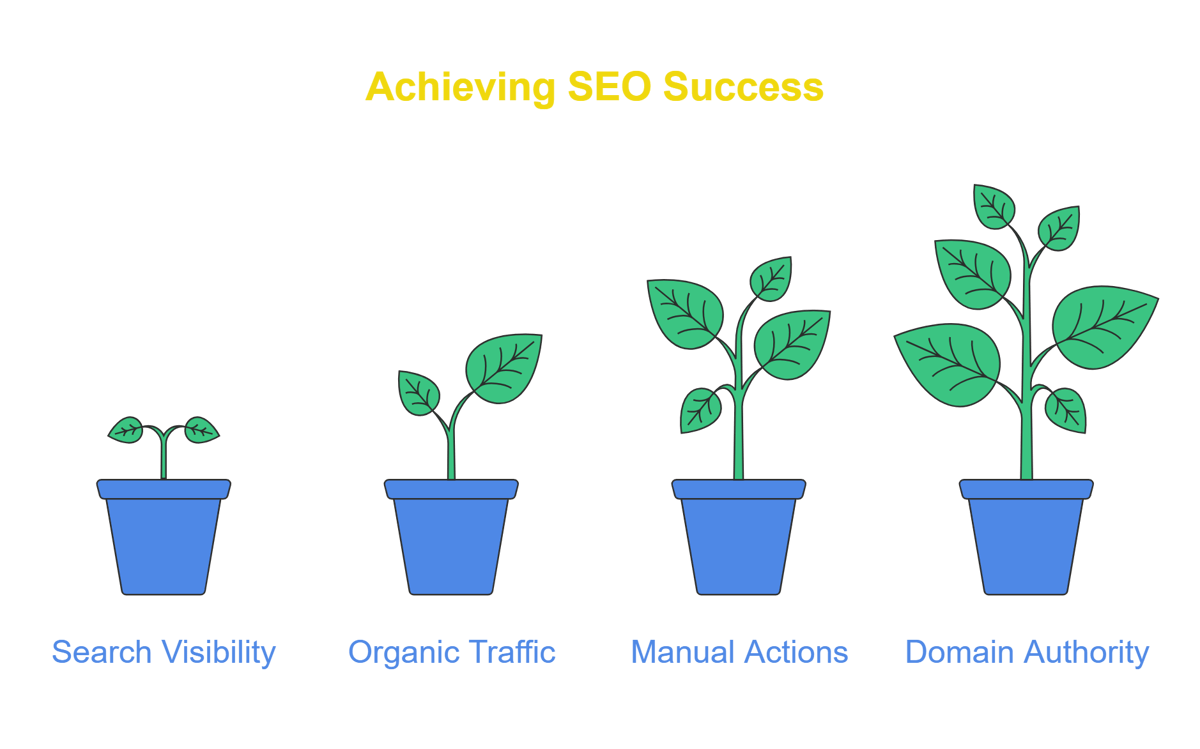
- After completing an audit and cleanup, track these metrics:
- Search Visibility: Are you ranking for more keywords? Have existing rankings improved?
- Organic Traffic: The ultimate goal is more visitors from search engines.
- Manual Actions: If you had a penalty, has it been lifted?
- Domain Authority: Has your site's perceived authority increased?
One client saw organic traffic increase by 32% within two months after removing just 50 toxic links. Sometimes the results are that dramatic.
Wrapping up
Your backlink profile is both your SEO foundation and reputation. In my years of experience, I've never seen a successful SEO strategy that ignored backlink quality.
If you take nothing else from this article, remember this: You're judged by the company you keep. Make sure the websites linking to yours are ones you'd be proud to associate with.
Whether you tackle this yourself or hire help, regular backlink audits are one of the highest-ROI activities in your SEO arsenal. Your future rankings depend on it.
FAQ
How often should I audit my backlinks?
For most sites, quarterly is sufficient. If you're in a highly competitive industry or have had problems before, monthly might be better. I check new links weekly for larger clients.
Can bad links really hurt my site that much?
Absolutely. I've seen sites lose 80% of their traffic overnight from manual penalties. Even algorithmic filtering based on suspicious links can cut traffic in half.
How many links should I disavow?
Only those you're confident are harmful. Being too aggressive with disavows can actually hurt more than help. When in doubt, I leave links alone.
How long does recovery take after cleaning up bad links?
It varies wildly. I've seen sites recover within days after disavowing toxic links, while others take months. For manual penalties, reconsideration requests typically take 2-3 weeks for Google to process.
Is it worth paying for backlink removal services?
In my experience, most paid removal services have poor success rates. You're better off handling outreach yourself or hiring an SEO professional who can help with the entire process, not just link removal.
Related Tools & Guides
Want these links without the spreadsheet?
We submit your product to 100+ directories by hand, starting at $99. Or the agent finds and pitches the pages already ranking for your keywords for $99 a month. Either way, you see every link before it goes live.