Website Directory Listings Made Easy
To get traffic to your website, you do not need to go beyond the traditional means of advertising. Typically overlooked, the one hidden secret to improving your site’s visibility and SEO is website directory listing.
Consider it like this: even if your site has a perfect design, is speedy, and is full of top-notch information, it is still invisible to the traffic if you do not promote it. This is where directory listings come into play. These platforms help individuals find relevant websites according to their interests, e.g., category, location, and service and are really liked by search engines too.
In this article, we will simplify the subject of directory listings by looking at how they work in 2025, their relevance, and the simple steps to be in the directory.
What Is a Website Directory Listing?
A website directory listing is an online registry in which your website is found on a public, open registry that people can search through, browse, and discover businesses or different websites by interest or industry. You can think of it as a digital version of the Yellow Pages, but smarter and better for SEO.
Normally, a directory listing would include your website’s name, a short description, contact details, category tags, and a backlink to your homepage or a landing page. These listings are a double-edged sword; they are a tool for users' discovery and also a signal of trust to search engines. In 2025, still, search engines still see links and mentions from high-quality directories as positive factors when evaluating the relevance and trustworthiness of your site.
Whether you’re a local business, a SaaS product, or a content-driven blog, having your site listed in the right directories means more eyeballs, more clicks, and better organic rankings.
Why Website Directory Listings Still Matter in 2025
In heavy reliance on content marketing and social media growth, older strategies are sometimes too easy to overlook. But directory listings are not out-of-date; they have merely transformed.
Search engines still rely on authoritative directories, particularly those that are niche-targeted. The way your site is displayed in reputable directories is perceived by Google as a vote of confidence. This is exceptionally valuable for blogs that are new or those that have yet to create many backlinks.
And unlike social media posts or paid ads, directory listings stick around. Once set up, they continue bringing in traffic over time — no boosting required.
Best Types of Directories to Get Listed On
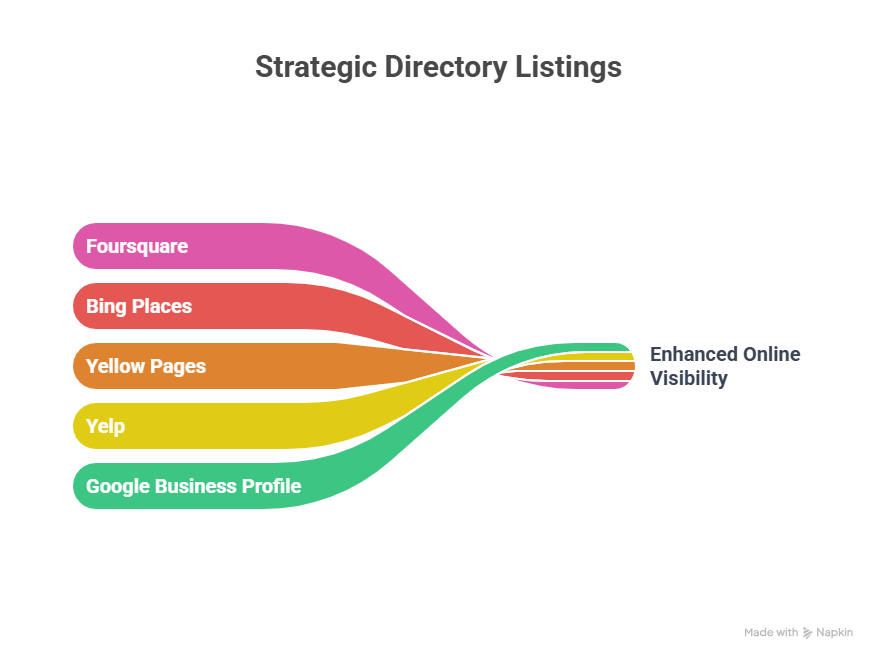
Not all directories are created equal. Some are general, while others are highly focused on industries or regions. Here's a breakdown of the most valuable types — and where your site should appear, depending on your niche:
General Business Directories
General business directories are websites where you can find and list businesses from all kinds of industries. They’re not focused on a specific niche—instead, they include everything from local cafes and salons to tech companies and consultants.
Popular Examples:
-
Yelp
-
Yellow Pages
-
Bing Places
-
Foursquare
Local Listings
Google Business Profile, Apple Maps, and Bing Places are essential business directories based on location. These listings are often shown specifically in Google Maps or local search results.
Niche Directories
Niche directories are targeted online listings that catalogue websites, companies, or professionals within a particular industry, category, or area of interest. In contrast to general directories (such as Yelp or Yellow Pages), niche directories concentrate on a specific audience or market.
Content-Based Directories
Content-focused directories are organized platforms that categorize and display websites, tools, or resources according to the content they provide rather than the industry or type of business. These directories emphasize the content's value or format—like blogs, tutorials, case studies, videos, or downloadable materials.
Examples of Content-Based Directories:
-
AllTop – Aggregates top blog content across different topics.
-
Feedly or Flipboard boards – Curated content sources in news or thought leadership.
-
Startup directories with learning hubs – Like IndieHackers or Product Hunt’s “Resources” sections.
-
Newsletter directories – Such as InboxReads or The Sample.
How to Optimize Your Directory Listings for Real Results
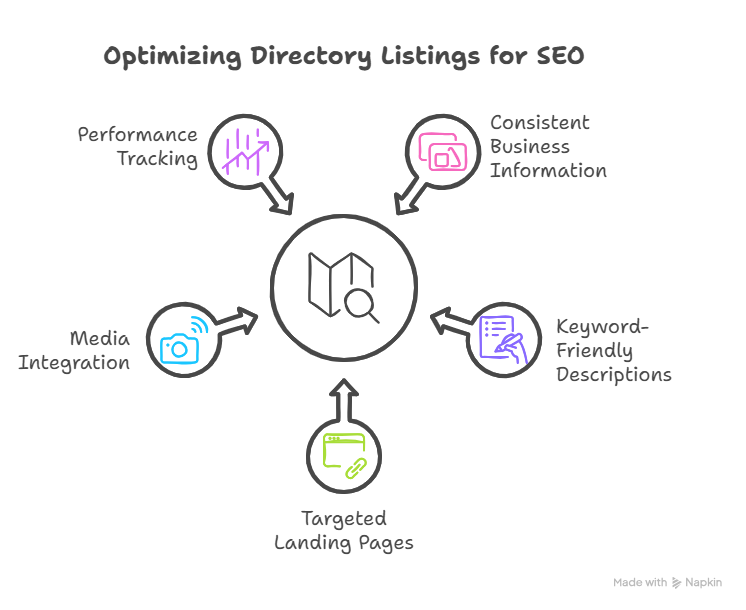
Getting listed is easy. Getting results from listings takes intention.
Here’s how to make sure your listings are helping your visibility and SEO:
- Use consistent business information
Your Name, Address, and Phone Number must be identical across every listing. Even small differences can confuse search engines and hurt your local SEO. - Write clear, keyword-friendly descriptions use
natural language, but don’t forget to include phrases your customers might search for. For example: “affordable web design for startups” is better than “we make websites.” - Link to targeted pages
Don’t always send visitors to your homepage. Link to landing pages that match the listing’s topic or offer. - Add images and social links
Listings with logos, headshots, or service screenshots tend to get more clicks. If the directory allows media, use it. - Track performance
Use UTM links or Google Analytics to monitor traffic coming from each directory. This helps you prioritize the platforms that actually bring value.
Taking time to optimize each listing can drastically improve both your click-through rates and search rankings.
Common Pitfalls to Avoid When Listing Your Website
While directory listings seem simple, many people fall into avoidable traps that limit their effectiveness.
One of the biggest mistakes is submitting to spammy or outdated directories. If a site looks low-quality or hasn't been updated in years, skip it. Links from such sites won’t help — and might even hurt — your credibility.
Another frequent issue is incomplete or inconsistent information. If you forget to include a working link, use different business names across platforms, or list an old email address, you risk missing potential leads.
Also, don’t expect instant results. Listings are a long-term strategy. They won’t flood you with traffic overnight, but they will build authority and trust gradually — the same way compound interest grows your savings.
Conclusion
When it comes to issues related to SEO and online business expansion, it is very easy to follow the latest, flashiest methods. However, the very best results come from simple tried-and-true methods — and directory listings are one of them.
They are easy, mostly free, and they provide long-term advantages. A few well-set listings will not only help you to get better search visibility and customers to find you more easily but also assist you in building trust among both users and search engines. And if you haven't started yet, it's time to do it.
FAQ:
Are directory listings still useful for SEO in 2025?
Yes. Directory listings remain a trusted source of backlinks and brand citations, especially from high-authority or niche platforms. They help search engines verify your credibility and improve your discoverability.
How many directories should I submit my site to?
Start with 5–10 high-quality, relevant directories. It’s better to be listed in a few great ones than dozens of spammy or irrelevant platforms.
Do I need to pay for premium directory listings?
Not necessarily. Free listings can offer great SEO value, but in some industries (like SaaS or agencies), paid placements on sites like G2 or Clutch can be worth it for visibility and leads.
How long does it take for a listing to show results?
Some listings get indexed within days, while others might take weeks. You’ll start seeing benefits over time as search engines crawl and process your new backlinks.