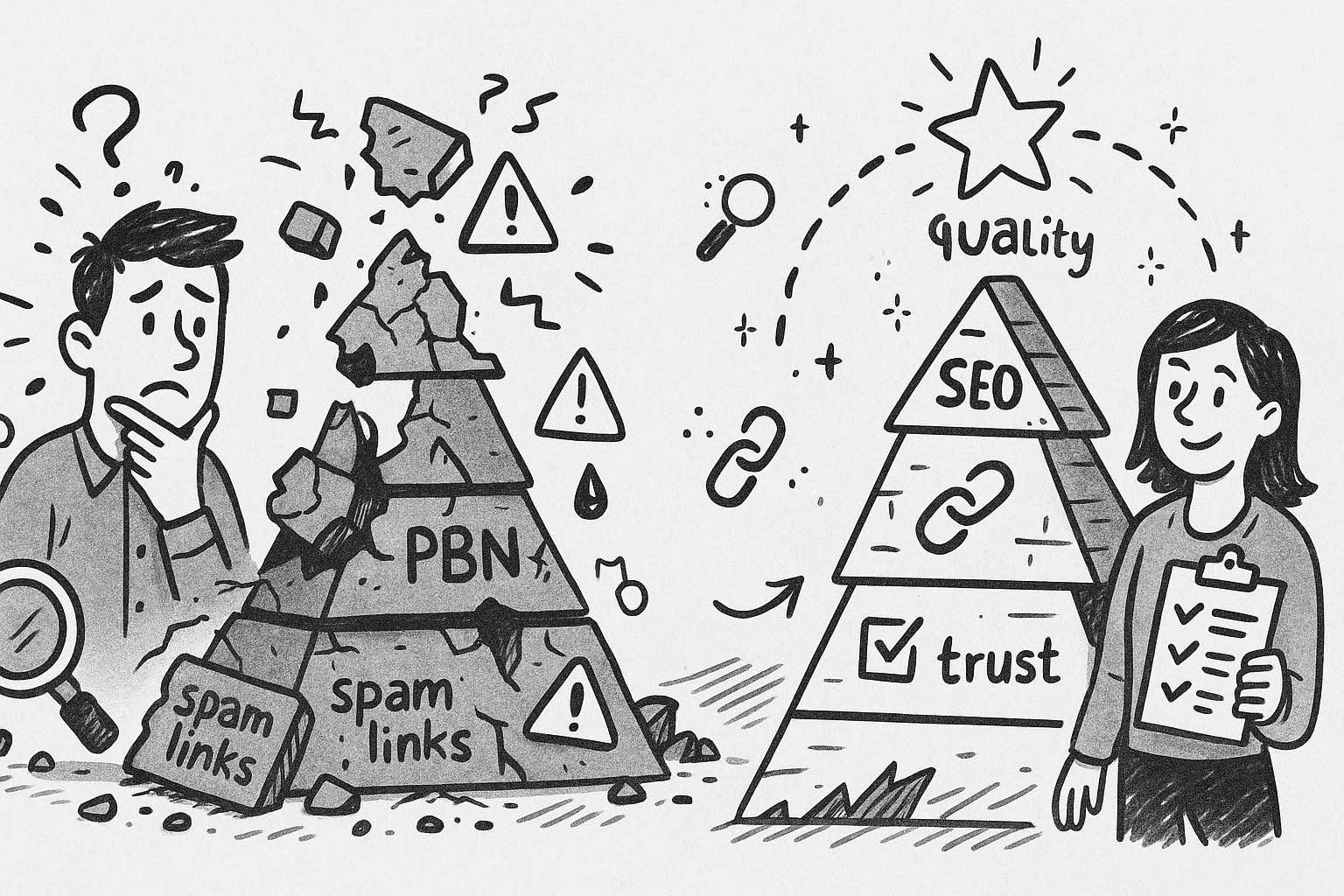
The short version
- Avoid the most common link-building mistakes in 2026.
- Learn how poor backlink strategies silently ruin SEO and how to fix them for long-term ranking success.
On this page13 sections
- 1. The "More Links = Better Rankings" Mindset
- 2. Playing the Field Instead of Building Relationships
- 3. The Keyword-Stuffed Anchor Text Trap
- 4. Neglecting Your Neighbourhood: Internal Linking
- 5. Flirting with Link Schemes – It's Not Worth It
- 6. Ignoring the Natural Rhythm of Link Acquisition
- 7. The Guest Post Assembly Line
- 8. The "Set It and Forget It" Approach to Links
- 9. The "Follow or Nothing" Mentality
- 10. Pushing Mediocre Content Uphill
- Conclusion
- FAQs
- Related Tools & Guides
After spending 8+ years helping websites recover from link-related penalties, I've seen firsthand how easily good SEO strategies can go south. The most frustrating part? Most website owners don't realise they're making these mistakes until their rankings take a nosedive.
Let me walk you through the link-building blunders I encounter most often in my consulting work – the same ones that might be undermining your hard work right now.
1. The "More Links = Better Rankings" Mindset
I still remember working with a client who proudly showed me their backlink report – 3,000 links acquired in just two months! Their excitement quickly faded when I explained why their traffic was plummeting despite all those new links.
Here's the truth: search engines have become incredibly sophisticated at evaluating link quality. I've consistently seen sites with 15-20 excellent, relevant backlinks outperform competitors with hundreds of mediocre ones.
My advice? Stop chasing numbers. One standout mention from an authoritative site in your field can drive more ranking power than dozens of random directory listings or forum comments.
2. Playing the Field Instead of Building Relationships
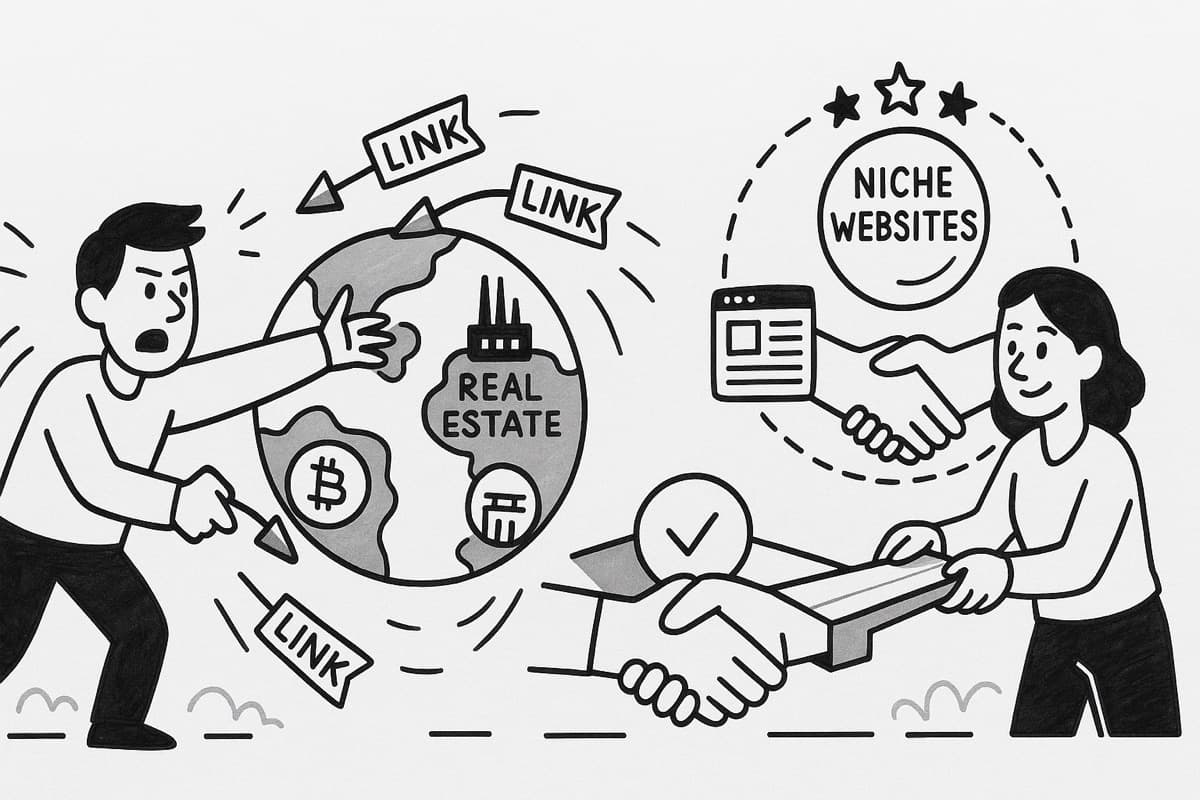
During a recent site audit, I noticed something alarming – a local bakery had backlinks from websites about cryptocurrency, industrial equipment, and overseas real estate. When I asked about their link-building strategy, they mentioned using a service that "guaranteed 50 links per month."
This scattergun approach is a recipe for disaster. Search engines view links as endorsements, and these endorsements carry substantially more weight when they come from websites within your ecosystem.
Instead, I helped them pivot to building genuine relationships with food bloggers, local news sites, and complementary businesses. Within six months, they had fewer total links but significantly better search visibility.
3. The Keyword-Stuffed Anchor Text Trap
"Click here to buy affordable handmade leather wallets with free shipping" – this was the actual anchor text one client was requesting in their outreach emails. They couldn't understand why their link-building campaign was yielding such poor results.
I pulled up their backlink profile and showed them what a natural one looks like. In reality, most people link using your brand name, a naked URL, or phrases like "according to this article" or "as mentioned here." Only occasionally do they use perfectly optimised keyword phrases.
After diversifying their anchor text approach, not only did they start getting more positive responses to outreach, but their existing links became more effective at driving rankings.
4. Neglecting Your Neighbourhood: Internal Linking
Last year, I worked with an e-commerce site that had invested thousands in link building while completely ignoring its internal linking structure. When we implemented a strategic internal linking plan, connecting related products and supporting category pages with thoughtful anchor text, their organic traffic increased by 31% – without a single new backlink.
Don't make the same mistake. Your internal links are entirely within your control and provide immediate SEO benefits. I recommend spending at least one day each month reviewing and improving your internal linking structure as your site grows.
5. Flirting with Link Schemes – It's Not Worth It
This is the mistake experienced SEOs warn about most bluntly, especially the cheap-marketplace version of it. In an r/SEO thread about backlink gigs on Fiverr, the advice was close to unanimous:
"Don't buy Fiverr links. It's a waste of money at best. Unless you know what you're doing, you shouldn't be buying backlinks anywhere, much less Fiverr." (u/NHRADeuce, r/SEO)
The trap is that a $10 gig promising 500 backlinks feels like a shortcut when you are staring at a zero-backlink profile. It is the opposite: those links are typically footprinted, low-quality, and exactly the pattern Google's link-spam systems are built to catch and discount. The expensive lesson founders keep reporting is that the money spent on scheme links would have gone further on a single genuine, relevant placement.
"But my competitor is doing it and ranking well!" This is something I hear constantly. Maybe they're using a private blog network or participating in link exchanges – and yes, sometimes these tactics work temporarily.
But I've helped too many businesses recover from manual penalties to recommend this approach. One client came to me after their traffic dropped 94% overnight from a manual action. It took us eight months of link removal, disavowing, and reconsideration requests to recover.
The relief when their site finally returned to the search results was palpable – but so was the regret over all the lost revenue during those eight months.
6. Ignoring the Natural Rhythm of Link Acquisition
When analysing backlink profiles of penalised sites, I often see the same pattern: flat growth for months followed by sudden spikes of dozens or hundreds of links appearing within days.
Natural link profiles don't develop this way. They grow organically over time with occasional spikes when you publish something exceptional or receive media coverage.
One effective approach I recommend is creating a link-building calendar that spreads your efforts evenly across months rather than implementing everything at once. This creates a more natural-looking velocity that won't trigger algorithmic filters.
7. The Guest Post Assembly Line
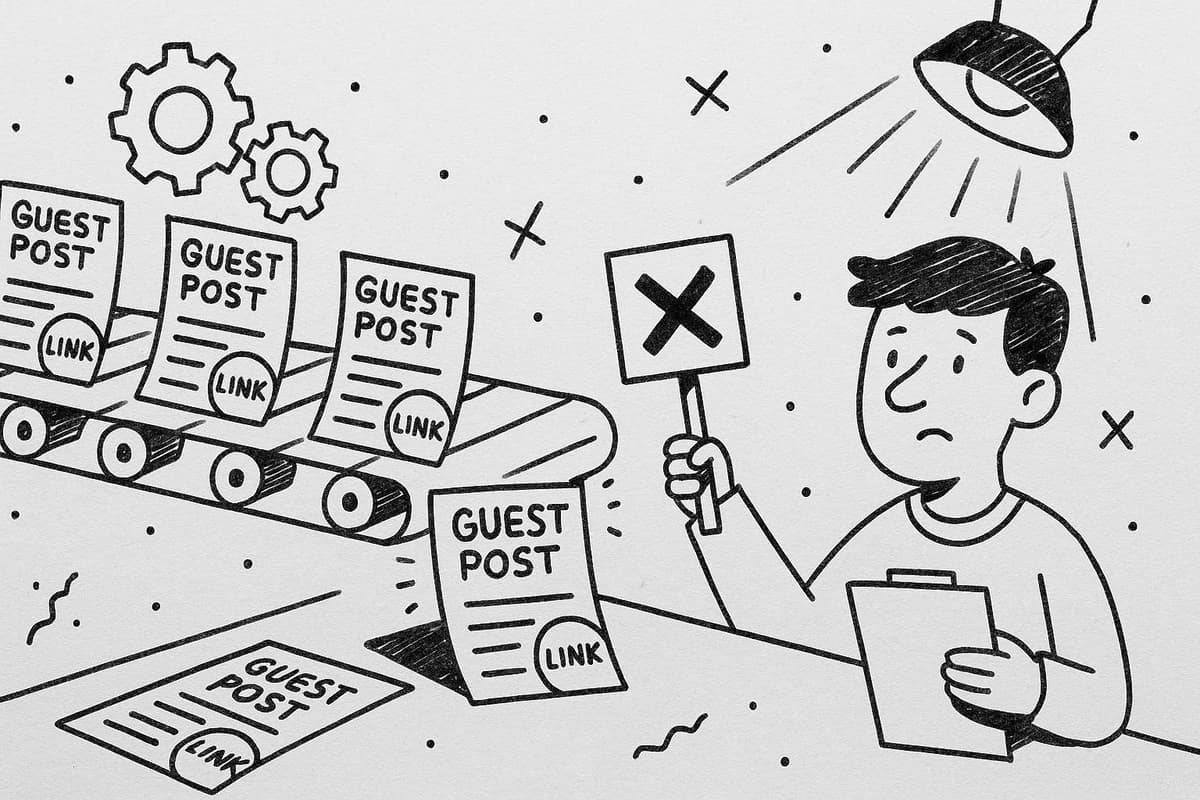
A marketing director once showed me their "guest posting strategy" – essentially outsourced articles being submitted to any site that would take them, with minimal quality control. The resulting links were from sites so packed with guest posts they barely had any original content.
Google has explicitly warned against mass guest posting, and these links provide minimal value while carrying substantial risk.
Instead, I've found success by having clients contribute thoughtful content to just 3-5 carefully vetted industry publications per quarter. These relationships develop over time and yield much more powerful links and referral traffic.
8. The "Set It and Forget It" Approach to Links
During a recent training workshop, I asked participants when they last audited their backlink profiles. Fewer than 10% had done so in the past year.
This is like building a house and never performing maintenance. Links break, sites get redesigned, and content gets removed. Without regular monitoring, you could be losing valuable link equity without realizing it.
Set a quarterly reminder to review your backlinks. Reach out about broken links, and update your most valuable referring content to keep it fresh and link-worthy.
9. The "Follow or Nothing" Mentality
"Should we bother with this opportunity if they only offer nofollow links?"
I get this question constantly, and my answer surprises many clients. Some of the most valuable links in my own site's backlink profile are nofollow links from major publications that continue to drive relevant traffic years after publication.
Judge link opportunities holistically – consider referral traffic potential, brand visibility, and audience relevance alongside SEO value. A diverse, natural-looking backlink profile includes both follow and nofollow attributes.
10. Pushing Mediocre Content Uphill
The hardest conversation I have with clients is explaining that their content simply isn't link-worthy. No amount of outreach can compensate for content that doesn't offer something truly valuable, whether that's unique research, exceptional utility, or a fresh perspective.
I remember one client who had spent months trying to build links to a basic "what is" article in a competitive space. We pivoted to creating original research with data from their customer base, and suddenly, publishers were eager to link without us even asking.
Before launching any link-building campaign, ask yourself honestly: "Would I link to this if it weren't my content?" If the answer isn't an enthusiastic yes, improve the content before starting outreach.
Conclusion
After years in this field, I've learned that sustainable link building isn't about tricks or volume – it's about creating genuine value and building real relationships. The approaches that work today will likely still work five years from now, while manipulative tactics come with expiration dates.
What link-building challenges are you facing right now? Drop a comment below, and I'd be happy to offer some specific guidance based on what I've seen work across different industries.
And if you found this helpful, please consider sharing it with a fellow website owner, because good link-building advice is always link-worthy.
FAQs
How can I tell if a link will help or hurt my SEO?
Ask yourself three questions: First, would the site link to you if you weren't asking or incentivising them? Second, does the site publish original, quality content regularly? Third, is the linking page relevant to your industry? If you answer "no" to any of these, proceed with caution. I generally look for sites that have their organic traffic and an established presence in the industry.
I've inherited a site with spammy links – what now?
Don't panic! First, perform a thorough backlink audit using a tool like Ahrefs or Semrush. Categorize links as good, questionable, or toxic. For toxic links, attempt outreach for removal first, keeping detailed records.
How many links should I build each month?
There's no magic number – it depends entirely on your industry, competition, and current site authority. For newer sites, I typically recommend focusing on earning 3-5 high-quality links monthly rather than chasing higher quantities.
Are social media links valuable for SEO?
While most social links don't directly pass ranking power, they're invaluable for content distribution that leads to genuine backlinks. Some of my most successful clients use social channels strategically – not for the links themselves, but to get their content in front of journalists, bloggers, and industry influencers who might link to it. Think of social as the first domino in your link-building strategy, not the end goal.
Related Tools & Guides
Want these links without the spreadsheet?
We submit your product to 100+ directories by hand, starting at $99. Or the agent finds and pitches the pages already ranking for your keywords for $99 a month. Either way, you see every link before it goes live.